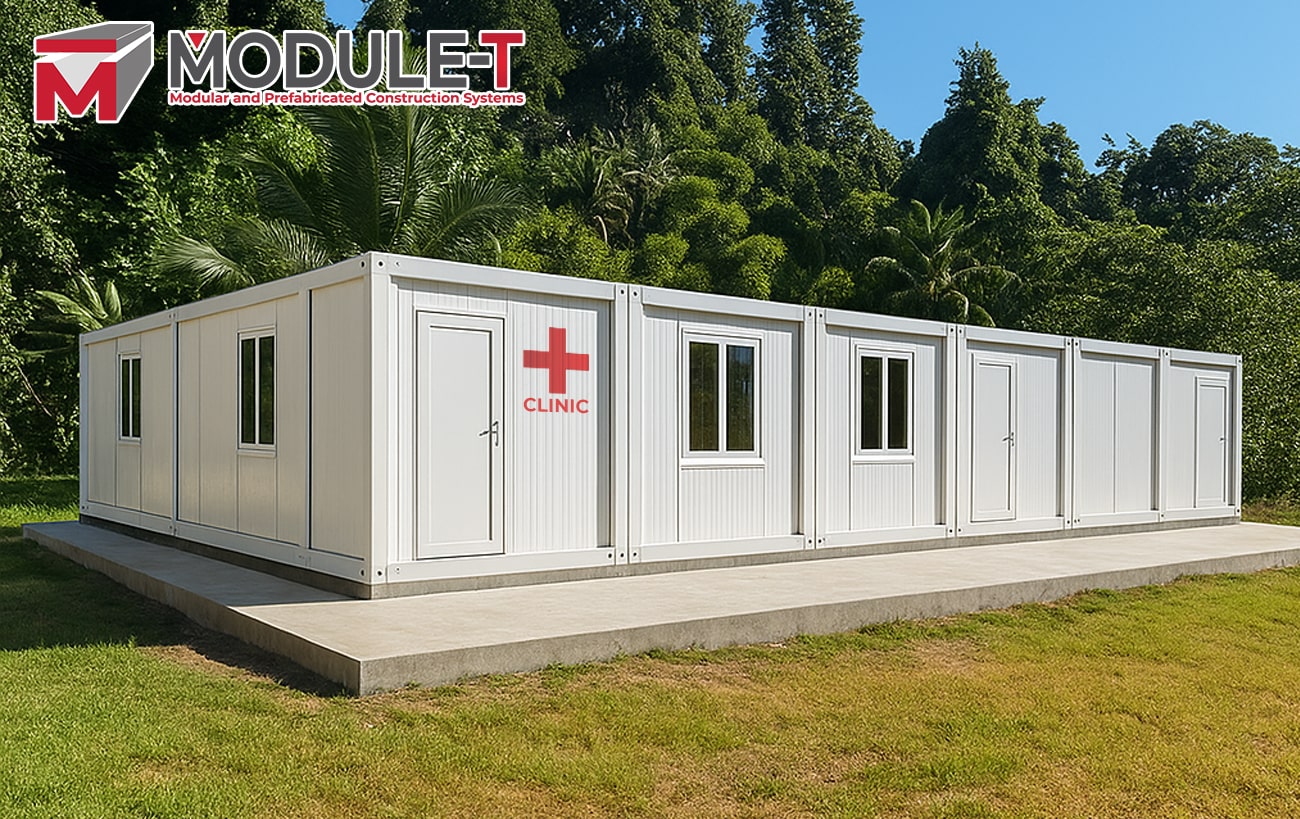
Healthcare construction projects demand stringent technical coordination far exceeding standard commercial or residential developments. Medical facilities require meticulous spatial planning for patient circulation, strict hygiene protocols, specialized HVAC negative-pressure filtration, seamless utility interfaces, and compliance with global medical codes. Module-T designs and manufactures ISO-certified modular building applications for healthcare tailored precisely to operational needs, remote site challenges, and international procurement standards.
With over 15 years of manufacturing excellence, Module-T supplies turnkey modular clinics, field hospitals, triage hubs, and specialized isolation units exported to over 120 countries. Our factory-engineered structures combine rapid off-site fabrication with uncompromising structural integrity and clinical compliance.
Building a prefabricated medical center requires integrating operational workflows before finalizing architectural and structural drawings. Medical layout planning separates spaces into public reception zones, sterile clinical rooms, staff office areas, and dedicated technical control spaces to safeguard hygiene and maintain smooth operational traffic.
Patient capacity, emergency response timelines, and diagnostic equipment profiles directly drive electrical power grids, sanitary connections, and air exchange system configurations. Defining these parameters early ensures that Module-T’s modular medical units accommodate heavy equipment structural loads and specialized clinical workflows smoothly on site.
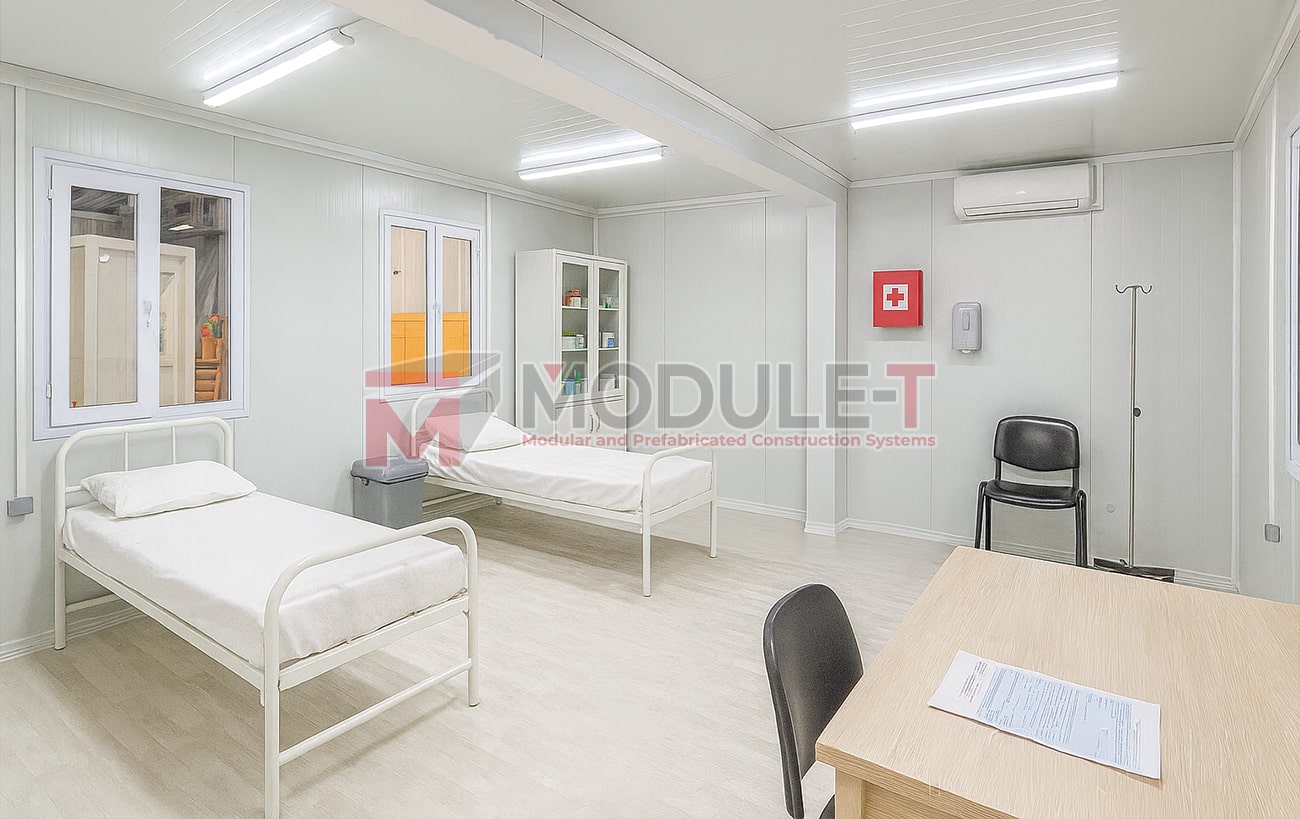
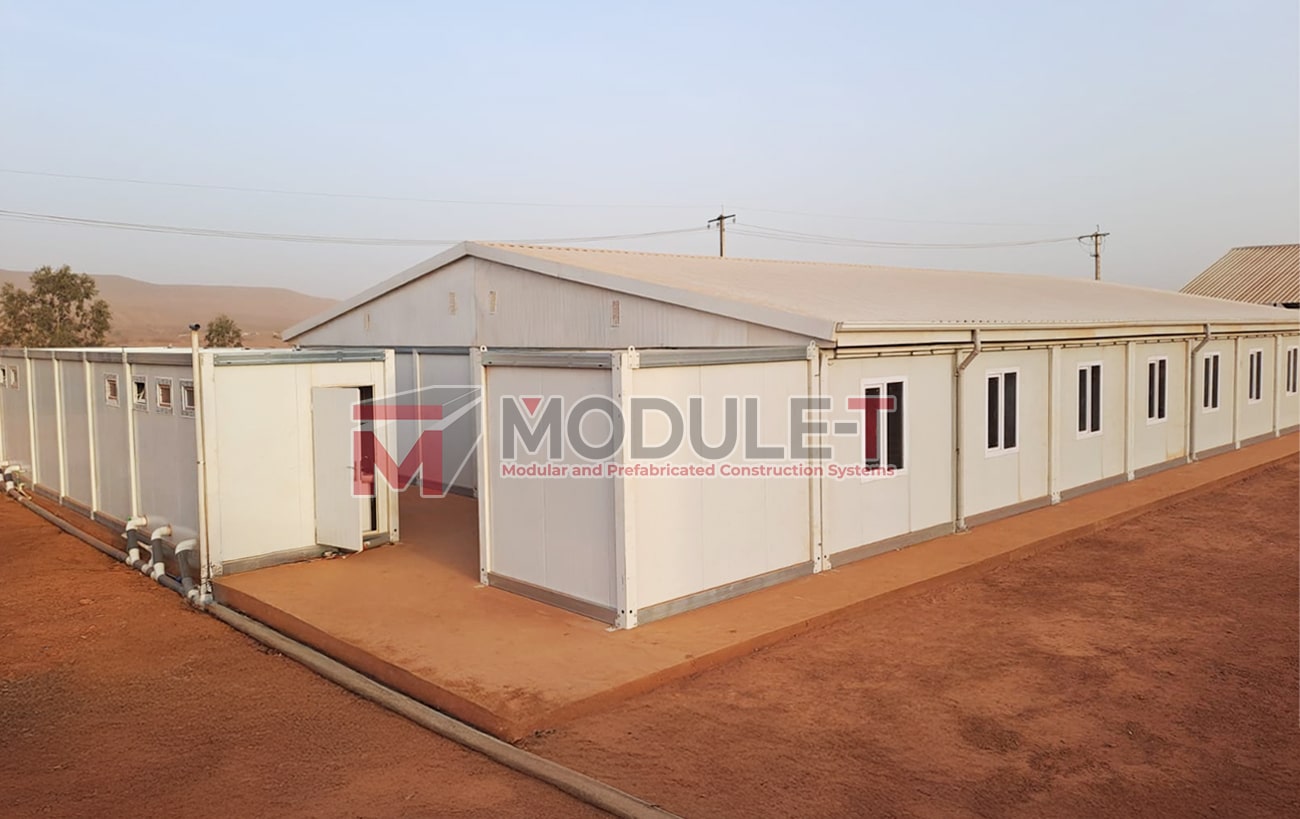
Each healthcare application carries specific environmental and physical demands. A standard occupational health office at a mining camp requires a different technical profile than a multi-room emergency field hospital or diagnostic suite. Key engineering considerations include:
Room adjacencies directly govern daily clinical efficiency and infection prevention. Specialized layouts establish distinct entry and exit paths for patients, medical staff, clean supplies, and medical waste. Consultation spaces, waiting rooms, sanitary units, and sterile storage areas are positioned to eliminate cross-contamination risks.
Interior wall surfaces, flooring, and ceiling systems are selected for durability and ease of chemical disinfection. Module-T integrates smooth, non-porous sandwich panels, heavy-duty anti-bacterial PVC flooring with coved skirtings, and chemical-resistant fixtures that withstand aggressive daily sanitization routines.
Cleanroom environments, isolation wards, and operating rooms demand controlled atmospheric conditions. Our modular healthcare units integrate HEPA filtration, positive/negative pressure differential controls, and high-efficiency HVAC systems to maintain continuous fresh air exchanges and control airborne contaminants.
Emergency medical machinery, X-ray apparatus, and life-support infrastructure require stable power supply lines and grounding. Structural frames are reinforced to carry heavy imaging equipment, while electrical infrastructure aligns with international safety benchmarks such as IEC 60364-7-710 for medical locations.
Proven track record supplying modular medical clinics, field hospitals, and relief accommodation across 6 continents under harsh climate conditions.
High-density Rockwool and Polyurethane (PU) sandwich panel insulation options delivering superior thermal efficiency and fire protection (A1 class available).
Electrical engineering compliance for medical locations, ensuring continuous backup power routing, earthing safety, and equipment isolation integrity.
Industrial megaprojects in mining, oil & gas, infrastructure, and energy often operate in isolated locations far from metropolitan hospital infrastructure. In these environments, establishing a rapid, fully equipped on-site medical facility is essential for workforce safety and regulatory compliance.
Module-T’s flat-pack modular container units simplify international freight logistics. Up to 10 standard 20ft flat-pack units can be packed into a single 40ft sea container, substantially cutting transport expenses to remote ports worldwide. On site, these modular components are rapidly assembled on simple foundation piers using standard site equipment.
Building safety and reliability are fundamental to Module-T's manufacturing ethos. Every prefabricated medical building is fabricated in our state-of-the-art facilities under strict ISO 9001:2015 Quality Management protocols. Structural steel components feature heavy hot-dip galvanization for exceptional anti-corrosion protection and carry CE Marking according to EN 1090 structural steel execution standards.
Healthcare facilities involve complex operational, sanitary, and mechanical parameters. Specialized HVAC pressure differentials, infection control pathways, clean room hygiene, and heavy equipment structural loads necessitate bespoke floor plans rather than generic office layouts.
Project teams should outline intended medical functions, patient volume, required room adjacencies, HVAC filtration specs, power demand for medical machinery, water/drainage requirements, and local site climatic/seismic loads.
Remote site conditions determine insulation thickness, HVAC capacities, structural wind/seismic reinforcements, foundation beam design, and container packing configurations to ensure hassle-free transport and rapid assembly on arrival.
Yes. Medical machinery such as X-ray systems, dental chairs, and laboratory analyzers can be integrated into the modular design. Module-T pre-engineers reinforced flooring structures, wall backing plates, and technical conduit channels during factory production.