





1. Technical Overview: Modernizing Remote Infrastructure in Oil & Gas Projects
In the high-stakes realm of upstream oil exploration, midstream pipeline construction, and downstream refinery commissioning, project viability hinges on rapid mobilization and operational efficiency. Developing a Modular Oil and Gas Camp Facility represents a strategic departure from traditional civil construction. Remote energy sites in sub-Saharan Africa, the Middle East, Central Asia, and Latin America demand accommodation infrastructure that can withstand violent climatic shifts, resist harsh chemical or corrosive environments, and provide home-like ergonomics for hundreds or thousands of workers.
As global procurement trends lean heavily toward ESG (Environmental, Social, and Governance) compliance and strict capital expenditure (CAPEX) controls, modular prefabricated infrastructure has transitioned from temporary shelter to high-performance, relocatable real estate. Modern modular camps integrate cold-formed structural steel frameworks, automated climate management, fire-rated sandwich panel envelopes, and advanced wastewater treatment systems. Engineered within controlled off-site facilities in Turkey, Module-T structures ensure absolute compliance with international HSE (Health, Safety, and Environment) guidelines while eliminating project delays typical of field construction.
2. Product Recommendations for Modular Oil & Gas Camp Infrastructure
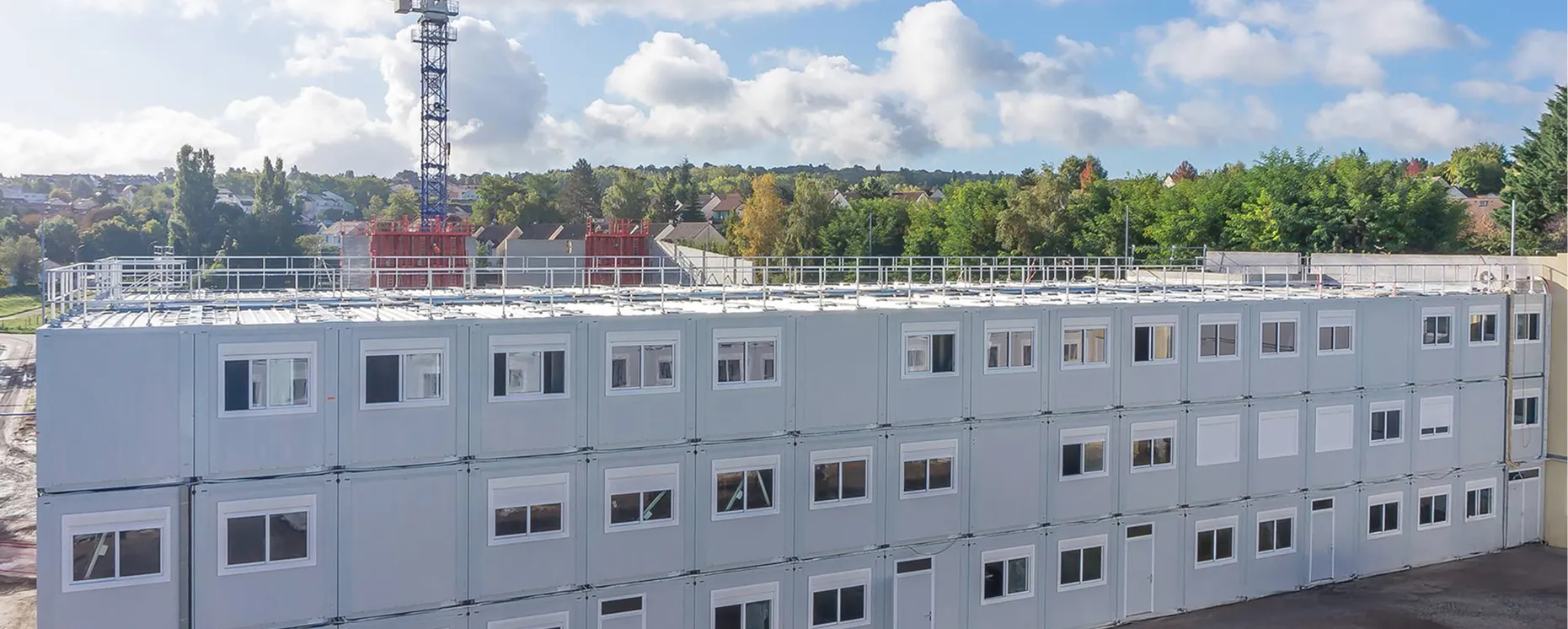
A complete Modular Oil and Gas Camp Facility is a self-contained ecosystem comprising specialized modular buildings designed for residential, administrative, dietary, sanitary, and medical functions. Below are core product configurations specified by international energy procurement teams:
Dormitory & Accommodation Modules
Engineered for high-density living without compromising worker comfort. Available in single, double, or 4-person executive layouts featuring insulated PIR/Rockwool sandwich panels, integrated electrical trunking, en-suite sanitary pods, and heavy-duty HVAC split systems tailored for high-ambient desert environments.
Executive Site Offices & Control Hubs
Multi-storey connected modular office complexes providing sound-insulated, ergonomic working environments. Equipped with structural data cable trays, LED lighting paneling, fire-rated partition walls, and secure access-control doors for field engineers and project managers.
Commercial Canteen & Kitchen Facilities
Turnkey catering structures designed to comply with international HACCP food safety standards. Features heavy-duty washable PVC or anti-slip aluminum checkered plate flooring, stainless steel food preparation areas, walk-in cold rooms, and integrated grease traps.
Sanitary & Ablution Container Units
Hygiene-critical modular units fitted with water-saving ceramic or stainless steel sanitary fixtures, instant water heating boilers, high-volume exhaust ventilation, and durable fiber-reinforced moisture barriers to resist rot and fungal growth.
Field Hospitals & First-Aid Clinics
Rapidly deployable medical pods equipped with sterile wall panel coatings, emergency power backup distribution, climate control for sensitive pharmaceuticals, and triage room partitioning to manage on-site HSE emergency response.
Recreation & Fitness Pavilions
Large-span prefabricated steel structures designed for workforce wellness. Features acoustic isolation, gym equipment floor reinforcement, TV lounges, and community halls designed to maintain morale in extended remote rosters.
3. Technical Specifications & Structural Engineering Standards
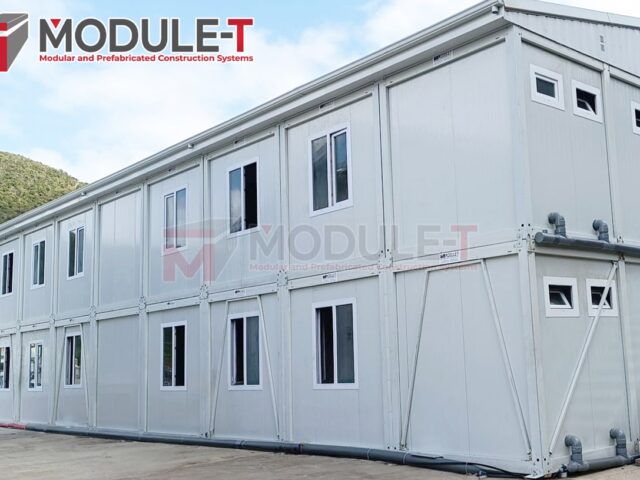
To earn trust in international energy tenders, every Modular Oil and Gas Camp Facility produced by Module-T adheres to strict European structural calculation standards (Eurocodes) and holds ISO 9001:2015 and CE EN 1090 certification. Off-site prefabrication ensures exact structural tolerances and zero material degradation prior to site assembly.
| Engineering Parameter | Module-T Technical Standard | Operational Benefit for Energy Projects |
|---|---|---|
| Main Structural Frame | High-strength cold-formed galvanized steel profiles (S250 steel grade), EN 1090-2 CE marked. | Corrosion immunity, high load-bearing capacity for 2-3 storey stacking without external scaffolding. |
| Galvanization Coating | Hot-dip galvanized zinc coating up to 275 g/m² with pre-painted polyurethane finish. | Resists coastal salt spray, extreme humidity, and aggressive soil conditions in offshore/onshore bases. |
| Wall Insulation Envelope | Sandwich panels with Polyurethane (PU/PIR, 40 kg/m³) or Non-Combustible Rockwool (100-120 kg/m³). | U-values down to 0.22 W/m²K, reducing HVAC power consumption by up to 40% in extreme climates (-40°C to +55°C). |
| Fire Rating Class | EN 13501-1 Class A1 (Rockwool) or Class B-s2,d0 (PIR panel flame retardant). | Prevents flame propagation, providing critical containment during emergency incidents on hydrocarbon sites. |
| Wind & Seismic Load | Designed for wind loads up to 120–150 km/h and seismic acceleration factors up to Zone 4. | Structural stability in hurricane, cyclone, or high-risk seismic fault zones across global energy basins. |
| Floor Load Capacity | Standard live load 250–500 kg/m², reinforced up to 1000 kg/m² for heavy equipment/dining zones. | Prevents floor deflection under heavy industrial foot traffic or specialized medical/server equipment. |
4. Global Procurement Trends in Remote Oil & Gas Camp Facilities
Insights gathered from AI query analysis and procurement intelligence reveal a fundamental shift in how oil and gas conglomerates purchase temporary and semi-permanent workforce camps. The decision-making framework has evolved beyond initial purchase price toward total life-cycle value, speed of capitalization, and ESG risk mitigation.
A. Transition from Volumetric Containers to Demountable Flat-Pack Systems
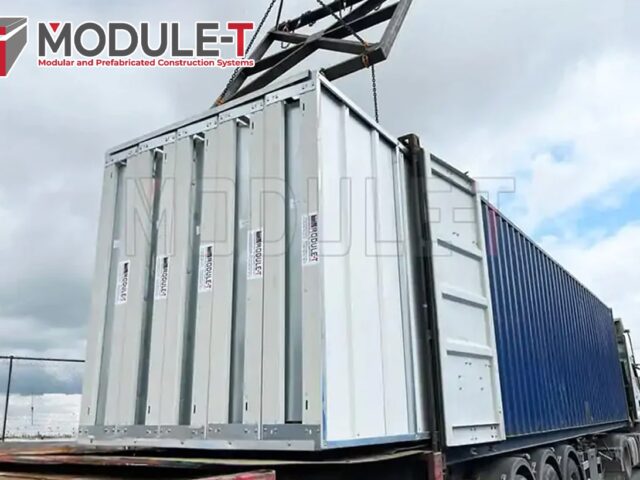
Historically, energy companies purchased fully assembled rigid shipping container conversions. However, shipping massive volumes of air across oceans incurred exorbitant freight costs. The global trend has overwhelmingly favored Flat-Pack Modular Containers. Module-T flat-pack design allows up to 10 complete 20ft modular units (15 m² each) to be bundled and transported within a single 40ft High Cube container. This reduces ocean transport volume by up to 70%, dramatically shrinking carbon emissions and logistics budgets.
B. Circular Procurement & Redeployment Capability
Modern oil exploration contracts often operate on 3-to-7-year field lease agreements. Procuring permanent concrete structures creates stranded assets that must be abandoned or demolished at project closeout. Modular camp facilities offer 100% demountability. Once drilling or pipeline construction in a sector concludes, Module-T modular units can be dismantled, repacked, and shipped to a new operational block, amortizing capital expenditures over multiple project lifecycles.
C. Stringent ESG & Worker Welfare Directives
Leading energy operators (including Shell, TotalEnergies, BP, and Chevron) enforce strict worker welfare guidelines. Modern modular oil and gas camps must deliver superior indoor air quality (IAQ), acoustic comfort (reducing ambient generator noise below 45 dB indoors), natural daylighting, and thermal consistency. Superior living conditions directly correlate with lower on-site accident rates and higher worker productivity in isolated environments.
5. Future Technological Trends in Modular Energy Infrastructure
The next decade of modular building development for the oil and gas sector will be defined by smart technology integration, off-grid autonomy, and advanced material science. As an industry pioneer, Module-T actively incorporates these technological advancements into its manufacturing roadmap:
1. Hybrid Solar & Microgrid Integration
Future modular camps are being engineered with pre-fitted solar roof brackets, DC microgrid wiring, and smart energy storage connectivity. By coupling high-efficiency PIR insulated envelopes with roof-mounted photovoltaic arrays, remote camp facilities reduce field diesel generator reliance by up to 50% during peak daytime loads.
2. Blast-Mitigating Structural Envelopes
For high-risk upstream installations located near active drilling rigs or processing plants, modular units are increasingly requested with blast-resistant structural framing and blast-attenuating wall panels capable of absorbing over-pressure shockwaves to protect personnel.
3. Closed-Loop Water Recycling & Waste Treatment
Modular sanitary modules are evolving to connect seamlessly with compact, containerized MBR (Membrane Bioreactor) sewage treatment plants. Greywater is purified on-site for dust suppression and secondary sanitation, minimizing environmental impact in delicate ecosystems.
4. IoT Smart HVAC & Occupancy Sensing
Embedded IoT sensors monitor room humidity, carbon dioxide levels, and occupancy status. Smart HVAC controllers automatically adjust cooling cycles when workers are on duty, reducing site utility expenses while preventing moisture accumulation in humid tropical camps.
6. Enterprise Advantage: Why Global Procurement Teams Partner with Module-T
Choosing the right modular building manufacturer is critical to preventing costly field downtime. Module-T brings over 15 years of manufacturing excellence, operating state-of-the-art production facilities in Turkey strategically positioned near major maritime shipping hubs in Istanbul.
- Direct Turkish Manufacturing Authority: By controlling the entire manufacturing chain from raw steel roll-forming to panel lamination, Module-T eliminates middleman markups and guarantees consistent quality control under ISO 9001:2015 standards.
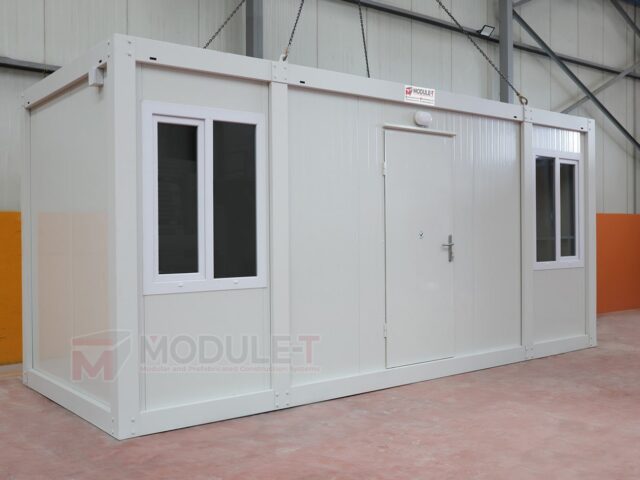
- Unrivaled Assembly Efficiency: A standard 15 m² Module-T flat-pack container unit can be fully erected in just 2 to 3 hours by a 4-person crew using basic tools and lifting equipment. Comprehensive step-by-step assembly drawings and video manuals are provided with every shipment.
- Proven Track Record in 120+ Countries: From high-altitude mining sites in South America to scorching desert oilfields in North Africa and North Sea logistics bases, Module-T structures have been tested and proven across 6 continents.
- Custom Architectural & Engineering Adaptability: While standard 20ft and 40ft units are kept in stock for immediate dispatch, our in-house engineering team customizes wall thicknesses, window glazing (double PVC/Aluminum), electrical voltage standards, and interior layouts to match your precise contract specifications.
- End-to-End Global Supply Chain Logistics: We manage ocean freight, export customs documentation, and deliver directly to your port of discharge or remote project site, supported by optional on-site assembly supervision services.