Executive Whitepaper: Re-engineering Primary Healthcare Delivery in Uzbekistan via Modular Infrastructure
The Republic of Uzbekistan is undergoing an unprecedented modernization of its healthcare ecosystem under the national flagship initiative "Strategy Uzbekistan — 2030". As state authorities expand primary healthcare infrastructure across remote agricultural sectors in the Fergana Valley, desert mining complexes in Navoai and Zarafshan, and rural outposts in Karakalpakstan, traditional brick-and-mortar construction models present significant bottleneck risks. Traditional brick construction in Central Asia typically suffers from long procurement lead times (12 to 18 months), high vulnerability to regional seismic activity, and severe disruption during harsh winter freezes.
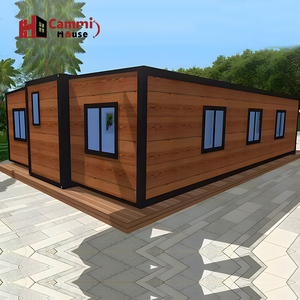
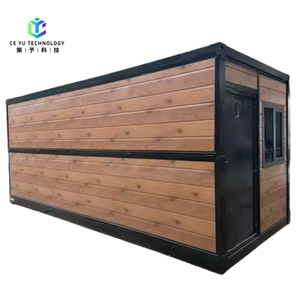
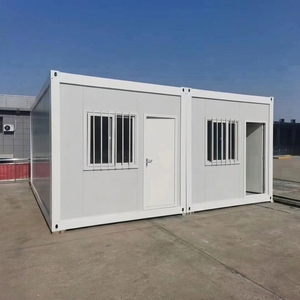
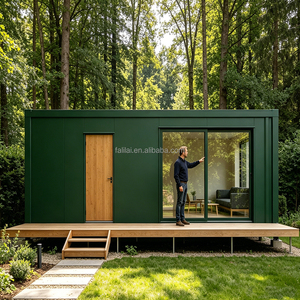
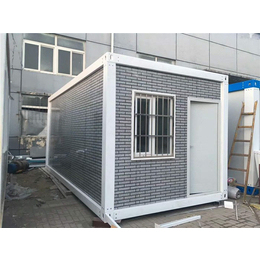
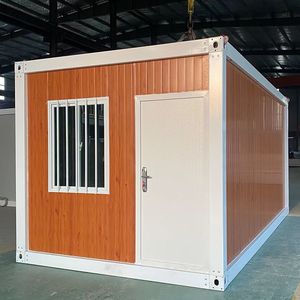
Flatpack portable clinic containers have emerged as the definitive structural bridge for healthcare procurement authorities, international aid organizations, and private mining/infrastructure conglomerates operating within Uzbekistan. Engineered with galvanized light gauge steel frames, thermal sandwich panel insulation, and standardized containerized logistics, flatpack medical units provide fully operational medical rooms, emergency triage bays, and diagnostic laboratories within days of site arrival.
Key Information Gain Insight: A standardized 15 m² flatpack medical container reduces total facility commissioning time by up to 80% compared to traditional masonry while offering seismic resilience rated up to MSK-64 Magnitude 9, matching Uzbekistan's strict national building codes (KMK standards).
As a certified global manufacturer and exporter supplying modular infrastructure across 120+ countries, Module-T delivers specialized flatpack container clinics tailored explicitly to Central Asian geographic and climatic conditions. By unifying ISO 9001:2015 quality controls, CE-certified structural steel fabrication, and direct-to-site freight routes across Trans-Caspian and Central Asian logistics networks, Module-T ensures turnkey compliance for B2B tenders and state healthcare projects throughout Uzbekistan.
Technical Architecture & Medical-Grade Material Engineering
Medical containers are subject to far more rigorous technical demands than standard site offices or worker accommodation. Clinical environments require strict infection control, non-porous cleanable surfaces, steady ambient temperature regulation, and uninterrupted power routing for life-saving medical apparatus. Below is the technical structural matrix executed in Module-T's flatpack portable clinic series:
Galvanized Light Steel Chassis
Hot-dip structural steel frames (S350GD + Z275 anti-corrosion layer) certified under CE EN 1090-1. Provides structural integrity against high wind loads (up to 120 km/h) and regional ground tremors.
Thermal Sandwich Insulation
100mm to 150mm Polyurethane (PUR), Polyisocyanurate (PIR), or high-density Rockwool cores. Achieves low U-values (down to 0.22 W/m²K) for extreme winter freezes (-30°C) and scorching summer heat (+45°C).
Hygienic Cleanroom Finishes
Antibacterial, seamless PVC floor coverings bonded to cement board sub-flooring. Smooth, washable pre-painted galvanized wall cladding resistant to clinical disinfectants and chemical scrub-downs.
Modular Electrical & Mechanical Integration for Medical Devices
Each flatpack clinic container exported to Uzbekistan is pre-wired to international electrotechnical standards (IEC 60364) with full compatibility for Uzbekistan's local 220V/50Hz grid systems. Standard clinical configurations incorporate:
- Integrated Micro-HEPA & HVAC Filtration: Dedicated fresh-air ventilation loops maintaining positive airflow pressure in procedure rooms to prevent contamination.
- Stabilized Emergency Power Routing: Pre-installed conduit paths for seamless connection to uninterruptible power supplies (UPS) and backup diesel generators.
- Medical Gas & Water Distribution: Surface-mounted stainless steel piping tracks for oxygen line integration and medical-grade elbow-operated or sensor sanitary sinks.
Localized Deployment Scenarios Across Uzbekistan's Strategic Regions
Uzbekistan’s diverse geography—ranging from high-density urban capitals to arid deserts and mountainous borders—demands versatile modular medical deployment models. Flatpack clinic containers solve unique operational challenges across four key regional sectors:
1. Remote Mining & Energy Mega-Projects (Navoai, Zarafshan, Almalyk)
Extensive gold, uranium, and natural gas extraction projects in the Kyzylkum Desert operate in harsh, isolated terrain. Module-T flatpack clinics function as heavy-duty field hospitals providing immediate emergency trauma care, occupational health checks, and staff pharmacy services directly at the extraction camp site.
2. Rural SVP & FAP Modernization (Fergana, Surkhandarya, Kashkadarya)
Under national primary care expansion mandates, rural medical posts (Rural Physician Posts - SVP) require rapid expansion. Modular clinic units serve as turnkey community maternal health centers, vaccination clinics, and general practitioner offices that can be commissioned in days without heavy site excavation.
3. Urban Infrastructure & Construction Site Medical Outposts (Tashkent City)
Large urban developments in Tashkent and Samarkand generate massive workforce densities. Mandated site safety protocols require on-site emergency triage. Detachable 20ft flatpack clinics provide compliant, transportable first-aid rooms that relocate as project phases move.
4. Border Health Controls & Crisis Relief (Termez & Karakalpakstan)
Positioned along strategic transport corridors and international borders, flatpack clinic containers serve as rapid screening posts, quarantine wards, and disaster relief medical stations capable of immediate air or flatbed truck transport.
Industry Trends & Procurement Roadmaps for Uzbek Buyers
The Central Asian construction market is shifting rapidly away from field-constructed masonry toward Off-Site Industrialized Construction (OSIC). Procurement managers and government contractors in Uzbekistan prioritize four critical strategic factors when evaluating international suppliers:
1. Total Cost of Logistics & Container Freight Optimization
Shipping fully assembled volumetric containers across landlocked Central Asia is financially restrictive due to high ocean-to-rail freight tariffs. Module-T’s proprietary flatpack design packages up to 4 complete 20ft container clinic units inside a single 40ft High Cube shipping container. This logistics engineering feat cuts international freight expenses by up to 75% for Uzbek importers accessing shipments via Poti/Batum (Georgia), Baku (Azerbaijan), or overland rail transit through Kazakhstan.
2. Rapid Assembly Without Specialized Heavy Equipment
In remote villages or desert sites where heavy 50-ton cranes are unavailable or costly to hire, flatpack containers present an ideal operational advantage. A standard 15 m² clinic module requires only a basic forklift or light mobile crane and a team of 3 trained technicians. Complete assembly is achieved in just 2 to 3 hours per unit, guided by Module-T’s comprehensive 3D assembly manuals and video engineering instructions.
3. Structural Reusability & Relocatable Assets
Unlike fixed concrete infrastructure, flatpack clinic containers are 100% demountable. When a mining project or temporary construction project concludes, the clinic can be dismantled back into a flatpack stack, loaded onto standard trucks, and re-erected at a new site with zero structural degradation.
Why Module-T is the Premier Export Partner for Uzbekistan
With over 15 years of dedicated manufacturing expertise, Module-T stands as an industry leader in modular construction, exporting high-performance prefabricated buildings and container systems to 120+ countries across 6 continents. Our modern manufacturing facilities in Istanbul, Turkey utilize automated roll-forming steel lines and precision sandwich panel assembly lines, enabling rapid mass production for large-scale international tenders.
🏆
ISO 9001:2015 Certified
Certified by TÜV Austria for rigorous quality assurance across design, engineering, and manufacturing phases.
🇪🇺
CE EN 1090-1 Structural Steel
Full compliance with European structural steel fabrication standards, guaranteeing load capacity and safety.
🚛
Direct Central Asia Shipping
Established multimodal freight corridors delivering directly to Tashkent, Samarkand, Bukhara, and Namangan customs posts.
Frequently Asked Questions (FAQ) for Clinic Container Procurement in Uzbekistan
Do Module-T flatpack clinic containers comply with Uzbekistan's KMK building standards and GOST certification?
Yes. All Module-T flatpack containers are engineered using CE-marked structural steel and fire-rated sandwich panels that meet international building standards as well as regional GOST-Uz structural safety requirements. We supply complete structural calculations, material testing certificates, and architectural drawings to assist local Uzbek engineering teams in obtaining quick municipal approvals.
How do these containers handle Uzbekistan's extreme temperature variations?
Uzbekistan experiences extreme continental climate conditions, with winter temperatures dropping below -25°C and summer temperatures exceeding +45°C. Module-T clinic containers utilize thick 100mm-150mm high-density Polyurethane (PUR) or Rockwool insulated sandwich panels, insulated floor layers, and double-glazed PVC/Aluminium windows. This thermal envelope prevents thermal bridging, reduces HVAC energy costs, and maintains comfortable internal clinical temperatures year-round.
What site foundation preparation is required prior to container assembly in Uzbekistan?
Flatpack containers do not require expensive deep concrete foundations. A level, compacted gravel pad or simple concrete strip/corner piers are sufficient. This drastically reduces site preparation costs and enables immediate deployment even in remote rural or desert locations.
What is the typical shipping lead time from factory to customs in Tashkent?
Manufacturing lead times typically range from 2 to 3 weeks depending on the order volume. Transit times from our Istanbul factory to Uzbekistan via overland truck or multimodal Caspian Sea rail/vessel networks average between 14 to 21 days, ensuring reliable overall project execution.
Can multiple flatpack containers be connected to form a large multi-room field hospital?
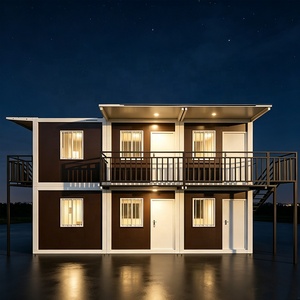
Absolutely. Module-T flatpack container units feature modular interchangeable wall panels. Multiple 20ft or 40ft units can be joined side-by-side or end-to-end without internal partition walls to create large open-plan waiting halls, operating suites, or multi-bed wards. Units can also be stacked up to 2 or 3 stories to maximize footprint efficiency.
Partner with the Leading Flatpack Clinic Exporter to Uzbekistan
Whether you require a single mobile emergency clinic or a full-scale 1,000 m² prefabricated field hospital complex, Module-T provides certified, cost-effective, and rapidly delivered modular solutions customized for your exact project specifications.
Get a Quote