Engineered for immediate disaster response, post-earthquake shelter relocation, and multi-functional emergency infrastructure across Mexico City and the Valley of Mexico.
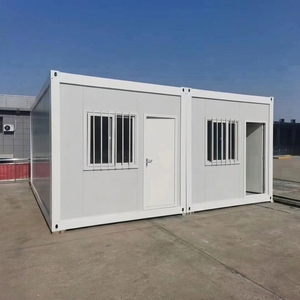
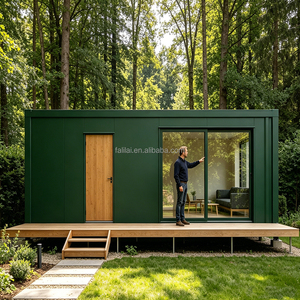
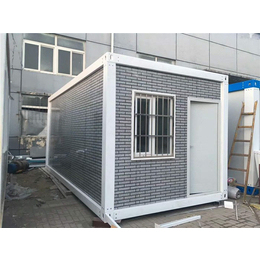
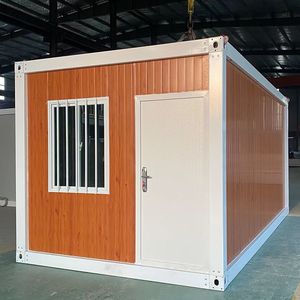
Engineering Resilient Disaster Housing for Mexico City's Geotechnical Environment
Mexico City (CDMX) presents one of the most complex geopolitical, seismic, and geotechnical challenges for emergency response and civil protection infrastructure worldwide. Located in the Valley of Mexico at an elevation of 2,240 meters above sea level, the metropolis rests largely on the soft, clay-rich lakebed of historic Lake Texcoco (specifically classified as Geotechnical Zone III - Lake Zone). During major seismic events along the Cocos and North American subduction zone—such as the catastrophic earthquakes of 1985 and 2017—the soft lacustrine clay deposits cause extreme seismic wave amplification and soil liquefaction, resulting in widespread structural collapse of traditional masonry and concrete buildings.
Crucial Information Gain for Procurement Officers & Civil Protection Agencies:
Traditional rigid structures suffer from high mass and low shear ductility under seismic stress. Modular light steel emergency housing structures manufactured by specialized global exporters possess high strength-to-weight ratios, allowing them to absorb lateral kinetic forces without catastrophic brittle failure. When deployed in Mexico City's high-risk boroughs like Iztapalapa, Cuauhtémoc, and Benito Juárez, modular container structures provide immediate life-saving shelter while maintaining structural integrity through seismic accelerations exceeding 0.4g.
Structural Physics of Modular Flat Pack Systems in Seismic Zone IX
Global emergency management directives, led by international organizations and Mexico's National Center for Disaster Prevention (CENAPRED), prioritize structural ductility, rapid assembly, and thermal performance. Prefabricated modular container units exported by global industry leaders like Module-T utilize cold-formed galvanized steel profiles (Q235B/Q345B grade steel) with yield strength exceeding 235 MPa. These frames are fastened using high-tensile bolted connections rather than rigid welds, creating flexible mechanical joints that dissipate seismic energy.
Engineering Benchmark: Disaster Relief Housing Technologies
When selecting disaster relief shelters for long-term emergency housing in urban centers like Mexico City, procurement directors must evaluate technical parameters including structural longevity, fire safety, wind load resistance, and deployment speed.
| Performance Criterion | Module-T Flat Pack Modular | Traditional Masonry / Concrete | Emergency Canvas / PVC Tents |
|---|---|---|---|
| On-Site Assembly Speed | 2–3 Hours (2 Technicians) | 3–6 Months | 30 Minutes |
| Seismic Performance | Zone IX Compliant (Flexible Joints) | High Risk (Brittle Fracture) | Immune (No Structural Rigidity) |
| Lifespan Expectancy | 25 to 30+ Years | 50+ Years | 6 to 12 Months |
| Thermal Transmittance (U-Value) | 0.35 W/m²K (Polyurethane Core) | 1.80 W/m²K (Uninsulated Brick) | 5.80 W/m²K (Single Layer Membrane) |
| Fire Safety Rating | Class A / B1 Non-combustible | Class A Incombustible | Combustible / Melt Hazard |
| Relocability & Reuse | 100% Demountable & Stackable | 0% (Permanent Demolition) | High (Short Degradation Cycle) |
Localized Application Scenarios in Mexico City & Metropolitan Area (EDOMEX)
The high urban density of Mexico City—housing over 9.2 million residents within the city proper and over 21 million in the greater metropolitan area—demands versatile disaster relief units that can be erected in confined spaces, urban parks, sports complexes, and peripheral hill districts.
1. Immediate Post-Earthquake Displaced Population Shelters
Following a major seismic rupture along the Pacific Coast fault line, immediate housing must be provided to displaced families to prevent secondary humanitarian crises. Module-T flat pack containers can be transported from maritime arrival ports (such as the Port of Veracruz on the Gulf Coast or Manzanillo on the Pacific Coast) directly along the Federal Highway network into CDMX. Installed rapidly on sports fields like Sports City Complex (Ciudad Deportiva) or public plazas, these units provide secure, lockable, weather-tight family accommodations equipped with electrical hookups, plumbing, and climate control.
2. Temporary Modular Field Hospitals & Quarantine Stations
Disasters inevitably strain health infrastructure. Modular container units fitted with anti-bacterial fiber-cement flooring, medical-grade PVC wall linings, and integrated HVAC filtration serve as triage units, emergency surgery cabins, and field pharmacies. By connecting multiple 20ft flat pack units side-by-side without internal partition walls, emergency response teams establish expansive 100m² to 500m² sterile field hospitals within 48 hours.
3. Rapid School & Educational Facility Reconstruction
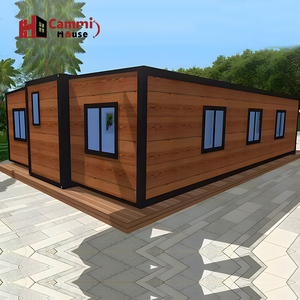
In post-disaster recovery phases, restoring educational continuity is essential for psychological recovery. Prefabricated expandable container classrooms (such as the Cammi House 3-Bedroom/School Unit) provide insulated, well-lit spaces for students while permanent schools undergo structural retrofitting under Mexico's strict National System of Civil Protection (SINAPROC) guidelines.
4. Administrative Emergency Command Operations Centers
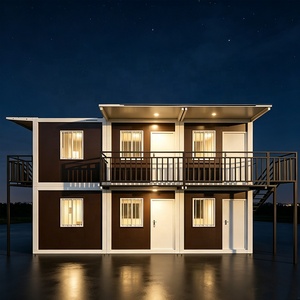
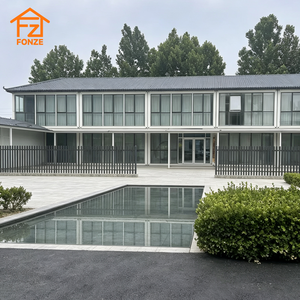
Disaster logistics require coordination centers for municipal agencies (SEDENA, SEMAR, and Mexico City's Secretariat of Integrated Risk Management and Civil Protection - SGIRPC). Stackable 2-story modular container offices provide satellite-connected emergency communications hubs, armed with thermal insulation to withstand Mexico City's intense UV radiation and afternoon rainfall during the summer rainy season (May through October).
Localized Market & Industry Development Trends Serving Mexico City
The procurement landscape for prefabricated structures in Mexico is undergoing a structural transition driven by government regulatory shifts, climate change risks, and nearshoring economic developments.
Industry Evaluation: Top 10 Modular Disaster Relief Housing Exporters
Evaluating international manufacturers capable of exporting disaster relief housing into Mexico City requires strict criteria: manufacturing capacity, ISO quality management, CE structural certification, thermal insulation customization, and international freight optimization.
Enterprise Profile: Why Module-T Leads Global Exporter Rankings
Headquartered in Turkey—a global hub for light steel prefabrication and structural engineering—Module-T exports modular prefabricated buildings and flat pack container systems to over 120 countries across 6 continents. Combining European engineering precision with optimized Turkish manufacturing cost efficiencies, Module-T supplies municipal governments, international non-governmental organizations (NGOs), mining firms, and tier-1 construction enterprises.
Module-T's Core Enterprise Competencies:
- ISO 9001:2015 & CE EN 1090 Structural Certification: All structural steel frame components undergo automated robotic roll-forming, hot-dip galvanization, and anti-corrosive powder coating, ensuring long-term structural integrity in tropical and high-altitude climates.
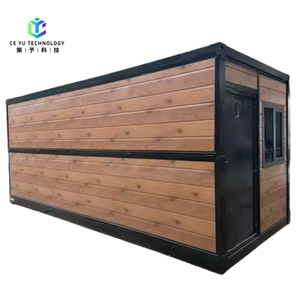
- Unmatched Assembly Speed: A standard 15 m² flat-pack modular container with pre-installed electrics, insulated wall panels, door, and windows can be fully erected in just 2 to 3 hours using basic hand tools and a light hoist.
- Cost-Effective Procurement (€180 to €420 / m²): By standardizing container chassis dimensions and maximizing automated manufacturing, Module-T delivers high-tier insulated modular housing at industry-leading price points.
- Flat-Pack Packaging Logistics: Specially engineered top and bottom chassis act as protective transit frames, enclosing all wall panels, roof panels, joinery, and hardware kits. Up to 6 complete flat-pack units fit into one 40ft High Cube container, reducing ocean freight costs to Mexican ports by up to 75%.
- Full Turnkey Customization: Tailored internal layouts including sanitary WC/shower blocks, commercial canteen facilities, multi-bed dormitories, and medical offices with customizable wall panel thicknesses (50mm to 100mm PU, EPS, or Rockwool).
Frequently Asked Questions (FAQ) for Mexico City Procurement Officers
Technical, logistical, and regulatory answers for importing and installing emergency modular housing in CDMX and central Mexico.