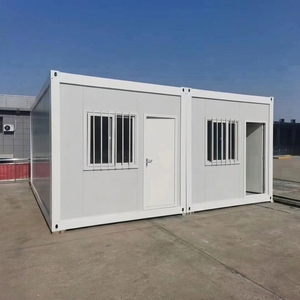
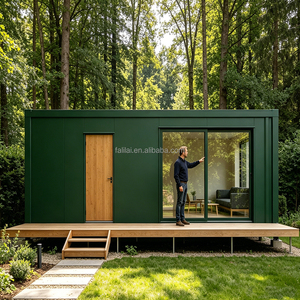
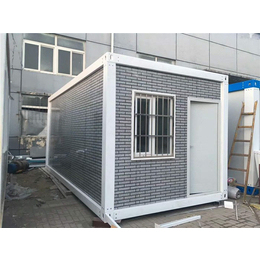
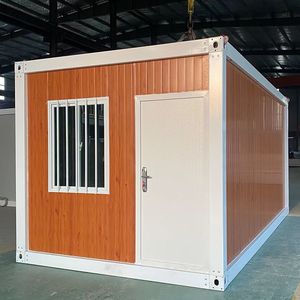
Structural Engineering & Industrial Demand for Modular Halls in Thailand
The demand for prefabricated multi-purpose halls in Thailand has undergone a structural paradigm shift over the past decade. Driven by the rapid expansion of industrial zones across the Eastern Economic Corridor (EEC)—encompassing Rayong, Chonburi, and Chachoengsao—alongside aggressive public infrastructure modernizations in Greater Bangkok, industrial procurement officers require building solutions that balance structural integrity, thermal efficiency, and rapid deployment capabilities. Traditional masonry construction is increasingly constrained by escalating labor costs, extended site lead times, and vulnerability to seasonal monsoonal delays.
As leading global manufacturers and international exporters of modular light-steel buildings, our engineering methodology integrates high-tensile galvanized steel frameworks with advanced sandwich panel insulation systems. Designed specifically to meet European (CE EN 1090) structural calculations and international anti-seismic standards, our prefabricated multi-purpose hall systems serve diverse functions: from large-scale industrial canteens, sports complexes, and disaster relief assembly zones to corporate conference centers and educational auditoriums.
Hot-Dip Galvanized Frame
Engineered with heavy-gauge galvanized profiles resisting high relative humidity (RH 80%+) and coastal salt corrosion across Thailand's Gulf ports.
High Thermal Resistance Core
Polyurethane (PU) and dense Rockwool core sandwich paneling deliver ultra-low thermal conductivity ($U$-values down to $0.22 \text{ W/m}^2\text{K}$), significantly reducing air conditioning operational expenses.
Clear-Span Modular Interiors
Advanced structural steel truss systems enable unobstructed floor plates exceeding 30 meters in width, ideal for sports halls, exhibition pavilions, and dining facilities.
Technical Specifications & Structural Engineering Matrix
The technical evaluation of prefabricated multi-purpose hall systems requires an analysis of structural loads, thermal performance, and logistics optimization. Below is a comprehensive engineering matrix detailing our standardized building parameters compared to traditional building practices in Southeast Asia:
| Engineering Parameter | Module-T Modular Multi-Purpose Hall System | Traditional Masonry / Field Concrete | Procurement Benefit |
|---|---|---|---|
| Structural Skeleton | Cold-formed hot-dip galvanized light steel frame (S350GD + Z275) | Reinforced concrete columns & mild black steel trusses | Zero rust propagation, superior seismic ductility & 50+ year lifespan. |
| Thermal Insulation | 50mm–100mm PU / Rockwool sandwich panels ($R$-value up to $4.5 \text{ m}^2\text{K/W}$) | Single-layer hollow concrete block ($R$-value $\approx 0.6 \text{ m}^2\text{K/W}$) | Saves up to 42% in annual HVAC electricity costs under tropical ambient heat. |
| Wind Load Capacity | Engineered for wind gusts up to $160 \text{ km/h}$ (Thailand Typhoon/Monsoon Grade) | Variable depending on local site workmanship quality | Certified compliance with Thailand's Department of Public Works regulations. |
| Erection Lead Time | 500 $\text{m}^2$ hall erected in 7 to 10 days on prepared foundation | 4 to 7 months intensive site work | Reduces preliminary site management costs & delivers accelerated ROI. |
| Logistics Efficiency | Flat-pack containerized shipping (Up to 160 $\text{m}^2$ floor area per 40ft HQ) | Bulk freight transport of raw materials | Cuts international maritime freight expenses by up to 60%. |
Localized Application Scenarios in Thailand
Thailand's unique geographical, climatic, and industrial landscape requires highly adapted structural engineering. As an established exporter to over 120 countries, our prefabricated multi-purpose halls are custom-configured for localized operational demands:
1. Industrial Canteens & Assembly Hubs in the Eastern Economic Corridor (EEC)
Manufacturing plants across Chonburi and Rayong require large-footprint assembly spaces and workforce dining facilities capable of housing thousands of workers daily. Our modular multi-purpose halls feature smooth, anti-bacterial, washable wall panel coatings compliant with ISO 22000 hygiene standards for food preparation, alongside high-volume HVAC integration points to maintain climate comfort during humid peak summer months (March–May).
2. Campus Auditoriums & Vocational Training Centers in Greater Bangkok
Educational institutions facing rapid enrollment growth in Bangkok, Pathum Thani, and Nonthaburi leverage modular construction to bypass lengthy public tender delays. Our structures feature sound-insulated acoustic acoustic wall panels (weighted sound reduction index $R_w$ up to $42 \text{ dB}$), fire-rated Rockwool cores (A1 non-combustible class), and heavy-duty vinyl flooring engineered for high foot-traffic durability.
3. Coastal Resort Event Pavilions & Eco-Tourism Venues in Southern Thailand
In coastal tourist destinations such as Phuket, Krabi, and Koh Samui, building permanent concrete structures is heavily regulated by environmental zoning laws and coastal setback rules. Prefabricated modular halls offer demountable, low-impact structural solutions. Utilizing marine-grade anti-corrosive polyurethane topcoats and panoramic double-glazed low-E glass facades, these halls serve as luxury wedding pavilions, convention centers, and eco-resort multi-purpose spaces.
4. Emergency Relief & Municipal Community Centers in Northern Provinces
In earthquake-prone northern regions like Chiang Mai and Chiang Rai, light gauge steel prefabricated structures provide inherent structural ductility. Their flexible bolt-connected nodes absorb seismic energy significantly better than brittle masonry walls, serving as safe municipal community centers, disaster shelter hubs, and seasonal agricultural processing halls.
Tropical Climate Engineering: Tackling Thailand's Environment
Building long-lasting infrastructure in Southeast Asia requires addressing two primary environmental factors: extreme thermal radiation and heavy tropical rainfall.
- High-Slope Roofing with External Downspouts: Our multi-purpose halls feature deep corrugated 0.5mm galvanized steel roofing sheets with high-volume perimeter gutters designed to clear rainfall rates exceeding $120 \text{ mm/hr}$, preventing roof pooling and water ingress during tropical monsoons.
- Cool Roof Technology & Solar Readiness: The outer roof skins are finished with high Solar Reflectance Index (SRI > 78) coatings to reflect solar radiation. Furthermore, structural trusses are pre-calculated to accommodate rooftop solar PV panel dead loads (up to $25 \text{ kg/m}^2$), allowing facilities to generate renewable energy under Thailand's tropical sunshine.
- Vapor-Barrier Wall Joints: Double-sealed male-female panel joints equipped with EPDM gaskets stop moisture penetration, eliminating interior mold and mildew risk under high humidity conditions.
Thailand Prefabricated Market Trends & Green Building Standards
The Thai construction sector is undergoing a rapid transition toward digital design (BIM) and Off-Site Modular Construction (OSMC). Driven by Thailand’s National 20-Year Strategic Plan and strict environmental mandates, major procurement buyers are seeking alternatives to traditional wet-construction methods:
1. TREES Certification (Thai's Rating of Energy and Environmental Sustainability): Developed by the Thai Green Building Institute (TGBI), TREES criteria favor building materials that reduce construction site waste, feature high recycled steel content, and offer high thermal performance envelope ratings. Module-T prefabricated multi-purpose halls achieve up to 90% recyclable material recovery upon decommissioning, aligning with TREES gold and platinum benchmarks.
2. Shift Toward Modular Scalability: Modern enterprises require agile physical infrastructure. Rather than committing capital to immovable concrete buildings, corporate buyers opt for modular steel halls that can be expanded horizontally by connecting additional flat-pack modules, extended vertically up to 3 stories, or completely demounted and relocated to new operational sites as business demands shift.
Enterprise Strengths: Why Global Procurement Teams Trust Our Supply Chain
Selecting an international exporter for structural steel halls requires evaluating factory capacity, quality assurance certifications, and export logistics experience. As Turkey's premier manufacturer exporting to over 120 countries, our operational framework delivers unmatched project security:
Certified Manufacturing Standards
Our production lines operate strictly under ISO 9001:2015 Quality Management Systems and ISO 14001 Environmental Management. Structural steel elements carry full CE Marking (EN 1090-2) compliance.
Optimized Sea Freight Logistics
Our proprietary flat-pack packaging system packs up to 160 square meters of structural hall elements into a single 40-foot Sea Container (40'HQ), minimizing shipping costs directly to Laem Chabang or Bangkok Port.
Global Technical Support & Supervision
Every multi-purpose hall shipment is accompanied by complete assembly shop-drawings, foundation layout plans, step-by-step installation guides, and optional on-site engineering supervision anywhere in Thailand.
Frequently Asked Questions for Local Buyers in Thailand
Below are clear, technical answers to common questions asked by project engineers, developers, and procurement managers when sourcing prefabricated multi-purpose halls for deployment in Thailand:
Request a Custom Engineering Proposal & Detailed Quotation
Planning an industrial canteen, sports complex, school auditorium, or commercial exhibition hall in Thailand? Consult with our expert modular engineering team today to receive CAD layouts, structural calculations, and competitive factory-direct pricing.
Get a Quote