Engineered Disaster Relief & Emergency Modular Housing Systems
Factory-fabricated, ISO 9001:2015 & CE-certified modular container units designed for rapid deployment, high thermal comfort, and extreme weather resilience in Bangladesh's delta climate.
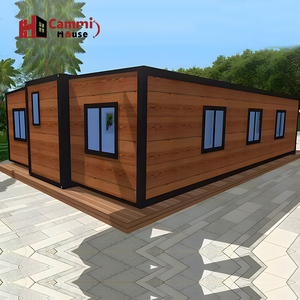
Cammi House Breathable Folding Expandable Container House 20Ft/40Ft
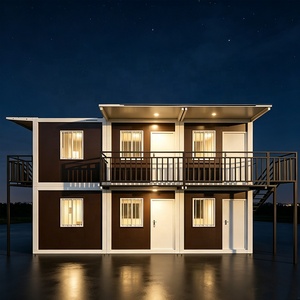
20FT 2-Story Thermal Flat Pack Container House with Optional Power & Terrace
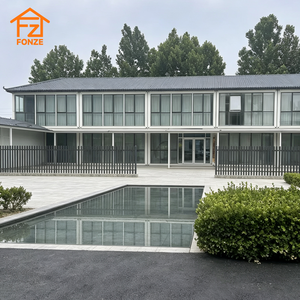
Prefabricated Flat Pack Container for Field Hospitals & Refuge Dormitories
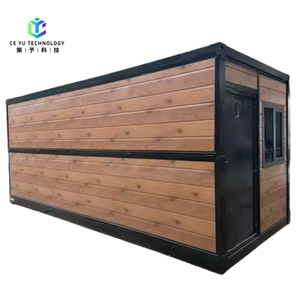
20ft Custom Foldable Modular Container Home for Living & Storage
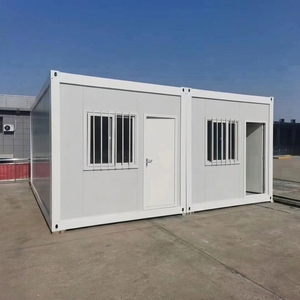
Insulated Flat Pack Container Unit for Worker Accommodation & Field Relief
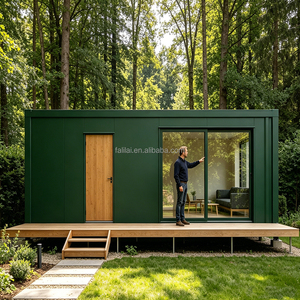
OEM Prefab Single-Story Detachable Container Cabin for Logistics & Office
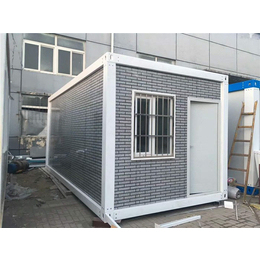
Luxury Sound-Insulated Energy Saving Quick-Build Modular Accommodation
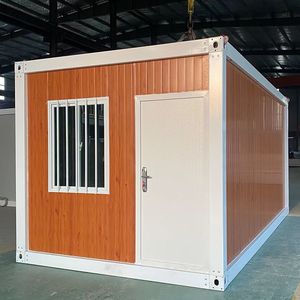
20ft Flat Pack Detachable Modular Cabin for Rapid Site Setup
Engineered Specifically for Bangladesh's Geo-Climatic Vulnerabilities
How our prefabricated modular housing technologies mitigate structural failure, thermal discomfort, and logistics bottlenecks in high-humidity delta environments.
High-Gauge Galvanized Anti-Corrosion Steel
Featuring hot-dip galvanized cold-formed steel chassis (Zn layer 180–275 g/m²). Resists saline corrosion in coastal areas like Chittagong, Cox’s Bazar, and Khulna.
Tropical Thermal & Acoustic Insulation
Wall panels utilize 50mm–100mm Polyurethane (PU) or Rockwool cores. Maintains indoor temperature stability during severe 40°C summer heatwaves and heavy monsoon rain sound dampening.
Optimized Freight & Rural Transport Logistics
Shipped as compact flat-pack units. A single 40ft HQ shipping container holds up to 8–10 flat pack units, dramatically lowering ocean freight to Chittagong Port and road transit to inland districts.
Technical Specification Benchmark for Disaster Relief Units
Direct engineering comparison supporting Bangladesh Ministry of Disaster Management and Relief (MoDMR) and international NGO procurement standards.
| Structural Parameter | Module-T Technical Standard | Disaster Relief Performance Benefit |
|---|---|---|
| Main Frame Structure | Cold-formed hot-dip galvanized steel profiles (2.5mm – 4.0mm thickness) | Resists seismic tremors (Up to Zone 3) & continuous high humidity without structural degradation. |
| Roof Insulation & Drainage | Integrated 50mm PU/Rockwool sandwich roof panel + 4 hidden corner rain downspouts | Prevents roof pooling during 300mm+ single-day monsoon downpours; redirects water cleanly. |
| Wind Load Capacity | Engineered up to 1.20 kN/m² (Equivalent to 180 - 240 km/h wind velocity) | Withstands Category 3 & 4 tropical cyclones common to the Bay of Bengal coastline. |
| Fire Safety Rating | Class A / B1 Non-combustible mineral rockwool wall option | Prevents rapid fire spread in high-density emergency shelter camps (e.g., Cox's Bazar settlements). |
| Assembly Speed | Flat pack design requiring standard hand tools and small crane/forklift | 4 technicians assemble 1 complete 15m² unit within 2 to 3 hours, enabling instant triage camps. |
Humanitarian & Structural Necessity: Disaster Relief Housing in Bangladesh
Bangladesh occupies one of the most hydrologically complex and geo-climatically vulnerable deltaic regions in the world. Situated at the confluence of the Ganges, Brahmaputra, and Meghna rivers, over 80% of its landmass consists of low-lying floodplains. Consequently, the country is routinely subjected to severe seasonal monsoons, violent Bay of Bengal tropical cyclones (such as Cyclones Sidr, Aila, Amphan, and Remal), riverbank erosion, and localized flash flooding. Furthermore, the northern and eastern zones lie adjacent to major tectonic boundary fault lines (the Dauki and Sunda Megathrust systems), exposing rural and urban centers to significant seismic hazards.
When catastrophic environmental events strike, traditional brick-and-mortar masonry construction presents severe drawbacks: slow construction speeds, high material weight leading to foundation settling on waterlogged alluvial soils, and massive logistics bottlenecks when moving raw cement, brick, and rebar to inundated regions. Conversely, flimsy temporary tarpaulins and corrugated tin sheets fail to provide adequate thermal comfort, security, acoustic insulation, or structural resistance during recurring cyclonic surges. Prefabricated modular disaster relief housing has emerged as the definitive global benchmark for emergency response, post-disaster reconstruction, and long-term humanitarian camp management in Bangladesh.
Localized Application Scenarios across Bangladesh Districts
Our engineered modular flat-pack container units and light-steel prefabricated housing systems are designed to fulfill distinct humanitarian, civic, and operational requirements across diverse administrative zones in Bangladesh:
1. Cox’s Bazar & Chittagong Division: High-Density Humanitarian & Refugee Camps
In the mega-settlements around Ukhiya and Teknaf in Cox’s Bazar, humanitarian organizations require rapid-to-erect, durable, and humane shelter infrastructure. Standardized 20ft modular flat-pack container cabins serve as emergency medical clinics, field administrative hubs, community centers, and secure security posts. Because these units utilize modular framing, they can be deployed quickly without degrading the fragile local hill terrain, while their non-combustible mineral rockwool wall options mitigate catastrophic camp fire hazards.
2. Coastal Cyclone Belt (Barisal, Khulna, Satkhira & Patuakhali)
Coastal districts face severe storm surges and cyclonic winds exceeding 200 km/h. Module-T's custom disaster relief cabins incorporate reinforced structural corner castings, heavy-duty floor framing, and elevated steel stilt foundations. Elevating the modular units 1.0m to 1.5m above ground level allows tidal surge waters to pass beneath the structure without breaching the living quarters, preserving human life, essential medical supplies, and emergency communications hardware.
3. Sunamganj, Sylhet & Haor Wetland Flash-Flood Zones
During the pre-monsoon and monsoon seasons, northeastern Bangladesh experiences sudden, intense flash floods that submerge entire sub-districts (Upazilas) within hours. Modular flat-pack units can be prefabricated off-site, transported via river barges, and assembled on elevated earth embankments or concrete piers in record time. Their watertight sandwich panel joins and anti-corrosive galvanized steel chassis ensure zero moisture ingress or structural rotting over decades of exposure.
4. Infrastructure & Power Megaprojects Site Accommodation
Bangladesh’s rapid economic expansion relies on megaprojects such as the Matarbari Deep Sea Port, Rooppur Nuclear Power Plant, and railway expansion corridors. Construction teams require turnkey worker housing camps, site offices, canteens, and sanitary WC blocks. Our stackable (up to 3 stories) modular container solutions provide comfortable, climate-controlled living quarters for thousands of engineers and field personnel, complete with pre-installed electrical wiring, sanitary plumbing, and HVAC routing.
Bangladesh Market Trends & Procurement Evolution (2025–2035)
The procurement strategy for disaster response in Bangladesh is undergoing a major technological transformation. Historically dominated by ad-hoc, low-cost temporary aid, international funding bodies (UNHCR, IOM, Red Crescent, Asian Development Bank) and the Ministry of Disaster Management and Relief (MoDMR) are prioritizing Circular, Modular, and Climate-Resilient Building Solutions. Key market trends include:
- Transition to Circular & Relocatable Assets: Government agencies and international NGOs no longer view relief housing as disposable single-use items. Modern flat-pack container cabins can be assembled during an emergency, disassembled post-recovery, packed back into shipping containers, and redeployed to a new disaster zone, yielding up to a 60% lifetime cost savings.
- Off-Grid Energy Integration: Disaster relief modular housing is increasingly specified with integrated rooftop photovoltaic (PV) solar panels, battery storage banks, and rainwater harvesting filtration systems. This enables immediate operational autonomy in remote rural areas where central power grids have been destroyed by storm events.
- Strict Thermal & Environmental Compliance: With summer ambient temperatures in Bangladesh frequently exceeding 40°C combined with 90%+ relative humidity, raw metal tin sheds become unlivable heat traps. Modern procurement guidelines mandate sandwich panel walls with minimum 50mm Polyurethane (PU) core or high-density Rockwool insulation to ensure human safety and minimize HVAC power consumption.
Manufacturer E-E-A-T Credentials: Why Global Buyers Trust Our Solutions
Module-T stands at the forefront of global modular building manufacturing. Operating state-of-the-art automated production facilities, we hold complete ISO 9001:2015 Quality Management System certifications alongside CE Marking under EN 1090 for structural steel fabrication. Having successfully delivered modular buildings, site office complexes, field hospitals, and relief housing to over 120 countries across 6 continents, our engineering team fully understands the rigorous technical demands of tropical maritime shipping, customs clearing, and rapid field deployment.
Every modular unit exported to the Bangladesh market undergoes stringent factory quality control checks: from structural load testing of galvanized steel beams to water tightness and fire resistance tests of sandwich wall panels. Our logistics team optimizes container packaging, ensuring that maximum volumetric efficiency is achieved—drastically lowering freight costs to Chittagong Port (Chattogram) and streamlining inland transport via river barge or truck flatbeds.
Frequently Asked Procurement Questions (Bangladesh Market)
Expert technical answers regarding importation, assembly logistics, climate resistance, and structural customization for Bangladesh buyers.
Partner with a Global Leader in Modular Disaster Relief Solutions
Get in touch with our technical engineering team to request detailed architectural drawings, structural calculations, factory pricing, and logistics plans for your relief project in Bangladesh.