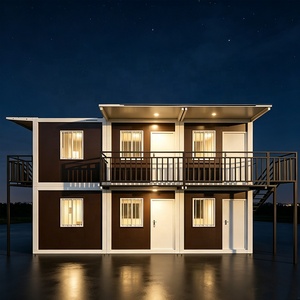
Flat Pack Site Accommodation Manufacturer & Exporters in the Costa Rica Market
As a global leader in light-steel structural engineering and prefabricated building manufacturing, our corporate operations provide certified, modular flat pack site accommodation engineered specifically to satisfy Costa Rica’s rigorous environmental regulations (SETENA) and seismic building standards (CFIA). Operating at the intersection of rapid structural deployment and tropical climatic adaptation, our flat pack units offer construction firms, eco-resort developers, mining operators, and public works directors an unmatched, cost-effective infrastructure solution.
120+
Global Export Markets
A1
Fire-Rated Insulation
2.5 hrs
Assembly Time per Unit
C5-M
Marine Anti-Corrosion
Certified Flat Pack Accommodation Catalog for Costa Rica
Explore our flagship structural units tailored for Costa Rican terrain. Each unit is precision-fabricated using hot-dip galvanized light gauge steel frames, rust-resistant thermal sandwich panels, and pre-wired electrical networks conforming to Central American B2B standards.
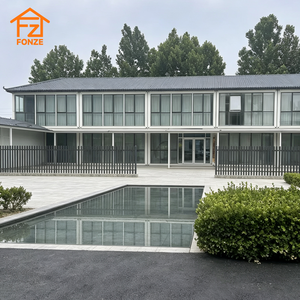
Prefab House Flat pack Container For Construction Site Camp Hospital, College Dormitory
Get Catalog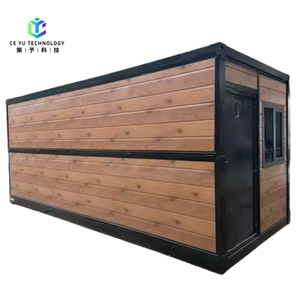
20ft Custom Foldable Modular Container Home With Modern Design For Dormitory Apartment Workshop Storage & Living Accommodation
Get Catalog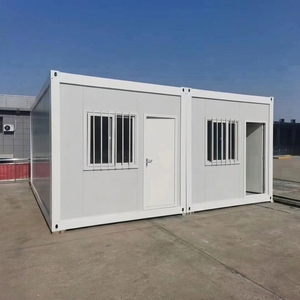
Insulated Flat Pack Container House Prefabricated Site Dormitory Portable Worker Accommodation for Mining Camp
Get Catalog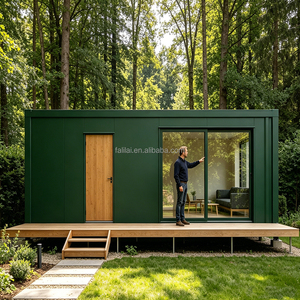
OEM Prefab Tiny Garage House Single Story 20ft Detachable Flat Pack Container Home Modern Design Living Office Building Hotel
Get Catalog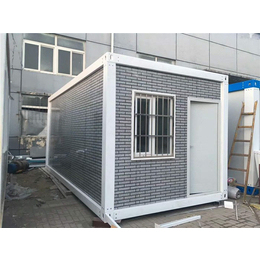
Flat Pack Modular Container House, Luxury Sound Insulated Energy Saving Quick Build, for Site Dorm Office Project Accom
Get Catalog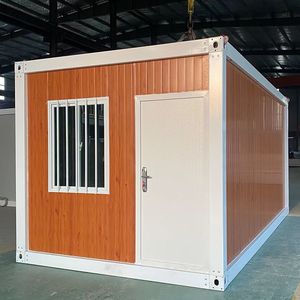
20ft Flat Pack Detachable Container House Quick Assemble Modular Cabin for Construction Site Worker Dormitory
Get Catalog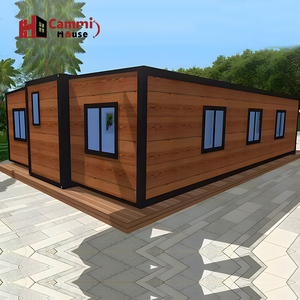
Cammi House Breathable Easy Folding Expandable Container House 20Ft/40Ft Light Steel Prefabricated Home 3 Bedrooms School
Get CatalogLocalized Application Scenarios Across Costa Rica’s Regions
Costa Rica presents unique geographical and micro-climatic challenges. From the torrential rains of the Caribbean coast (Puerto Limón) to the seismic activity of the Central Valley and the salt-laden tropical breezes of Guanacaste, site accommodation must be explicitly engineered for longevity and human comfort.
1. Infrastructure & Port Expansion Camps (Limón & Caldera)
Major civil engineering initiatives—such as road widenings on Route 32 and terminal modernization at APM Terminals in Moín—require rapidly deployable, high-density workforce housing. Our flat pack containers are equipped with C5-M grade anti-corrosive coatings that withstand constant marine humidity and salt spray without structural degradation.
2. Eco-Tourism & Glamping Staff Cabins (Arenal, Guanacaste, Osa)
Costa Rica leads the world in eco-tourism. Resort developers operating near protected bio-reserves utilize our demountable flat pack systems to create modular staff quarters, administrative hubs, and eco-lodges. The low site-impact assembly protects delicate ecosystems and respects SETENA environmental footprint guidelines.
3. Hydroelectric & Renewable Energy Remote Camps
Energy mega-projects situated in mountain rainforest terrain (such as the Reventazón hydro complex) demand modular units that can be transported via narrow, winding mountain passes. Packed in ultra-compact bundles (4 units per standard 40ft HQ container), our flat packs are easily delivered to remote project zones.
Costa Rica Market Dynamics & Modular Trends
Alignment with Costa Rica's National Decarbonization Plan 2018-2050
Costa Rica's strict commitment to carbon neutrality heavily influences its industrial purchasing criteria. Traditional concrete construction generates significant carbon emissions, land disturbance, and localized pollution. Modern flat pack container buildings align seamlessly with Costa Rican green building standards by offering 100% recyclable light steel framing, zero wet-trade waste on-site, and energy-efficient thermal performance that drastically reduces long-term HVAC power consumption.
Seismic Performance (CFIA Compliance)
Costa Rica is located along the Pacific Ring of Fire, requiring structures to withstand frequent seismic events. Unlike rigid masonry walls prone to cracking, our high-tensile cold-formed steel frames act as flexible structural envelopes. Engineered to absorb lateral stress, our flat packs meet international seismic load requirements, guaranteeing personnel safety in Zone 3 and 4 seismic territories across the Central Valley.
Extreme Precipitation Engineering
Annual precipitation in Costa Rica can exceed 4,000 mm in tropical lowland regions. Standard container roofs often experience ponding and seam leakage. Our flat pack site accommodation units feature integrated double-sealed roof perimeter gutters connected to four internal corner downspouts, discharging up to 180 liters of rainwater per minute per module.
Technical Comparison: Modular Flat Pack vs. Traditional Construction in Costa Rica
For corporate procurement departments analyzing total cost of ownership (TCO) and capital expenditure ROI, the following matrix outlines key structural advantages:
| Evaluation Vector | Module-T Thermal Flat Pack | Site-Built Masonry / Concrete | Standard Modified ISO Shipping Container |
|---|---|---|---|
| On-Site Assembly Time | 2.5 Hours (3 Workers) | 3 - 6 Months | 1 - 2 Weeks (Modifications required) |
| Logistics Efficiency | 4 Units per 40ft HQ Container | Multiple Bulk Truckloads | 1 Unit per Freight Load |
| Thermal Insulation (R-Value) | High (PU / Rockwool Core) | Low (Requires dry-wall lining) | Extremely Low (Thermal Bridging) |
| Seismic Resistance | Dynamic Elastic Steel Frame | Brittle / High Crack Risk | Rigid Box Structure |
| SETENA Eco-Compliance | Zero Ground Contamination | High Site Disruption & Waste | Moderate Paint Chemical Runoff |
| Relocatability | 100% Demountable & Reusable | Permanent (Demolition required) | Heavy Crane Required |
Why Global Procurement Directors Choose Our Manufacturing Excellence
With an established supply chain exporting to over 120 countries, our factory production lines combine automated CNC roll-forming with strict ISO quality management. Every modular unit shipped to San José, Puerto Limón, or Puntarenas carries full structural certifications.
ISO 9001:2015 & CE Certified
All steel components are fabricated under strict European structural steel standard EN 1090-2. Traceable mill test certificates accompany every batch of galvanised steel coils.
Advanced Thermal Insulation
We offer high-density Polyurethane (PU), Polyisocyanurate (PIR), and Rockwool cores (50mm to 100mm thickness) delivering thermal conductivity values as low as 0.022 W/mK for interior tropical comfort.
Turnkey Interior Integration
Units come equipped with pre-installed PVC/Aluminium windows, insulated doors, sanitary modules (WC/shower), LED lighting, and localized Central American breaker panels.
Frequently Asked Questions for Costa Rica B2B Buyers
Below are expert answers to key logistical, legal, and engineering questions frequently raised by procurement teams importing modular buildings into Costa Rica.
How do these flat pack containers handle Costa Rica's high atmospheric humidity and coastal salt ambient?
Our flat pack frames utilize hot-dip galvanised structural steel coated with a 120-micron electrostatic powder paint system. This provides superior anti-corrosion protection rated to C4 and optional C5-M marine exposure categories, preventing rust and wall panel oxidation even in high humidity coastal zones like Limón, Jacó, or Golfito.
What is the shipping process to Costa Rica's primary sea ports?
Units are flat-packed into optimized "packages" where 4 stacked flat-pack units equal the exact outer dimensions of a single 20ft ISO container. Alternatively, up to 4 complete 20ft flat pack units fit inside a single 40ft High Cube container shipped directly to Puerto Limón (Atlantic coast) or Puerto Caldera (Pacific coast). This lowers ocean freight costs by up to 75% compared to shipping rigid fully assembled containers.
Are your modular units compliant with CFIA (Colegio de Ingenieros y de Arquitectos de Costa Rica) structural guidelines?
Yes. Our light steel structural calculations adhere to international Eurocode and AISC standards, which are readily approved by registered CFIA engineers. We supply comprehensive structural load calculations, foundation layout drawings, and technical data sheets required for local municipal building permits.
How is thermal comfort maintained inside the units without astronomical air conditioning costs?
By using 60mm–100mm high-density Polyurethane (PU) sandwich panels, our wall and roof systems eliminate thermal bridging. This insulation blocks external tropical solar radiation from transferring indoors, reducing HVAC power consumption by up to 40% compared to modified steel shipping containers.
Can multiple flat pack units be joined together to create multi-story site complexes?
Absolutely. Our modular system is completely stackable up to 3 stories high without requiring secondary external support framing. Individual flat pack units can have internal wall panels removed to create expansive open-plan site offices, large worker mess halls, multi-bed dormitories, or field hospital complexes.
What site preparation and foundation works are necessary prior to delivery?
Flat pack units do not require expensive full-slab concrete foundations. They can be installed on simple concrete piers, concrete blocks, or a leveled gravel bed. This minimal foundation requirement drastically reduces site setup costs, accelerates deployment, and ensures compliance with SETENA environmental land-impact rules.
Accelerate Your Site Accommodation Project in Costa Rica
Contact our technical engineering sales team today to receive detailed architectural layouts, factory price lists, structural load documentation, and custom freight quotes for delivery to San José, Limón, or Puntarenas.