Featured Commercial Prefabricated Buildings & Modular Units
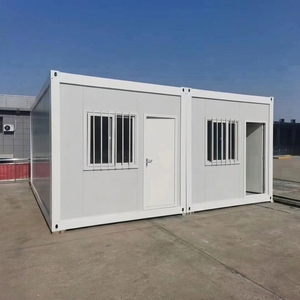
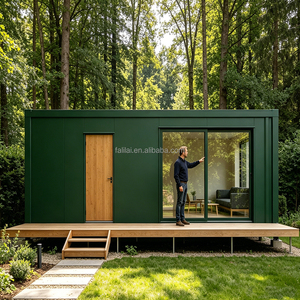
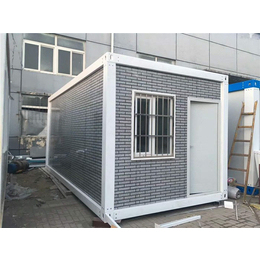
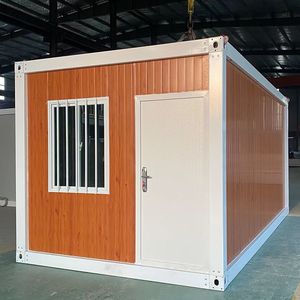
Custom-engineered flat pack, foldable, and light-steel modular office structures optimized for immediate deployment across Nigeria.
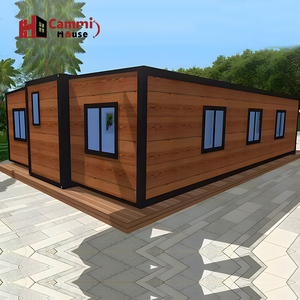
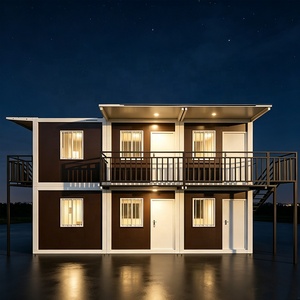
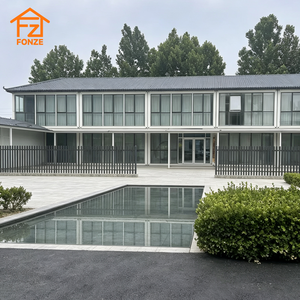
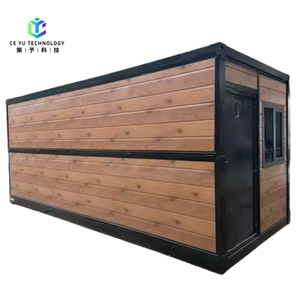
1. Whitepaper: The Commercial Real Estate Paradigm Shift in Nigeria
Nigeria's commercial infrastructure ecosystem is undergoing unprecedented structural transformation. Driven by rapid urban expansion in Lagos, the rapid development of the Lekki Free Trade Zone, oil & gas logistics operations in Port Harcourt, and administrative growth in Abuja, commercial real estate developers face a triad of challenges: escalated traditional building costs, extended project completion timelines, and stringent structural demands imposed by tropical coastal environments.
Traditional wet-construction methodologies using concrete blockwork are increasingly economically unviable for fast-moving corporate projects. Material inflation, unpredictable extended project cycles, and structural cracking caused by high water tables and soil settlement in coastal West Africa demand a superior alternative. As a leading primary Chinese manufacturer of prefabricated commercial office buildings, our factory delivers complete industrial modular solutions engineered specifically for Nigeria's unique macroeconomic and physical operating environments.
Key Market Insight: Modular prefabricated office structures reduce construction timelines by up to 85% compared to traditional concrete buildings, providing corporate enterprises, mining hubs, and industrial contractors in Nigeria with rapid capital payback and immediate workspace monetization.
Why Chinese Modular Engineering Leads the Global Market
By leveraging advanced automated cold-formed thin-walled light gauge steel (LGS) manufacturing lines, computerized structural design software (BIM & Tekla Structural Designer), and integrated supply chain economies of scale, our manufacturing facility manufactures heavy-duty modular commercial buildings that satisfy international building standards (EN 1090-1, ISO 9001:2015, and Eurocode structural compliance). Our prefabricated units combine structural steel framing with high-density polyurethane (PU) or Rockwool core sandwich wall panel systems, delivering robust thermal shielding, acoustic insulation, and seismic resilience.
2. Engineering Specifications for Tropical West African Climates
Deploying commercial office infrastructure in regions such as West Africa requires comprehensive engineering adaptations. Standard domestic container conversions fail when exposed to high ambient humidity, high solar radiation indices, and aggressive saline air along the Gulf of Guinea. Our specialized export-grade commercial prefabricated office buildings incorporate multi-tiered structural protections engineered for harsh tropical conditions.
| Engineering Parameter | Standard Specification | West Africa / Nigeria Tropical Enhancement |
|---|---|---|
| Primary Framing | Q235B / Q355B Galvanized Light Steel | Hot-Dip Galvanized Coating (275g/m²) + Epoxy Anti-Corrosion Primer (C3/C4 Saline Rating) |
| Wall Insulation | 50mm EPS Panel | 50mm - 100mm High-Density PU Core / Rockwool Panel (Fire Rating Class A / B1) |
| Roof Structure | Flat Pack Integrated Drainage Frame | Secondary Slope Oversized Tropical Rain Roof + Heavy Duty Hidden Gutter System |
| Wind Load Resistance | 90 km/h | Engineered for Monsoonal Wind Loads up to 120 km/h (Category 12 Storm Resistance) |
| Thermal Conductivity | 0.038 W/m·K | Sub-0.022 W/m·K (Reduces Office Air Conditioning Power Consumption by up to 40%) |
| Foundation Requirement | Continuous Concrete Footing | Flexible Ground-Screw, Strip Concrete, or Point Pier Foundation (Ideal for High Water Table Areas) |
Advanced Thermal Management and HVAC Efficiency
Electricity reliability remains a strategic operational consideration for commercial properties across Nigeria. To minimize reliance on diesel generators, our commercial office buildings utilize high-performance thermal breaks. The integration of 75mm continuous Polyurethane (PU) sandwich panels featuring zero-ODP blowing agents creates an airtight envelope. Double-glazed argon-filled low-E glass aluminum windows prevent thermal radiation ingress, ensuring interior workplace ambient temperatures remain stable between 21°C and 24°C with significantly lower HVAC energy consumption.
3. Localized Application Scenarios Across Nigeria
Our prefabricated commercial buildings provide flexible architectural configurations ranging from single-story administrative hubs to multi-story corporate headquarters, field operations centers, and commercial retail complexes.
Lagos Corporate & Free Zone Offices
Rapidly deployable multi-story administrative buildings for financial services, freight logistics, and tech firms operating in Lekki, Victoria Island, and Ikeja Industrial Zones.
Port Harcourt Energy Base Camps
Explosion-resistant, heavily insulated site offices and operational command units tailored for oil & gas operators, refinery expansions, and marine engineering camps.
Abuja Government & NGO Facilities
Architecturally refined semi-permanent and permanent modular office complexes designed for fast civil deployment, educational administrative hubs, and international agencies.
Agro-Industrial & Logistics Hubs
Scalable, dust-sealed, and pest-resistant office and laboratory units positioned near agricultural processing estates in Ogun, Kano, and Kaduna states.
Mining Site Accommodation & Operations
Heavy-duty, quick-assembly flat pack office cabins, worker dormitories, and canteen complexes engineered for remote solid mineral sites across Northern and Central Nigeria.
Turnkey Commercial Real Estate Parks
Multi-unit modular business parks designed for developers seeking flexible leasing solutions with minimal site disruption and reusable asset value.
4. Macroeconomic Trends & Shipping Optimization to Nigerian Ports
Procuring commercial modular infrastructure directly from a premier Chinese manufacturer unlocks substantial cost-efficiency and logistics advantages. Our factory specializes in SOC (Shipper Owned Container) and flat-pack shipping optimization, significantly reducing ocean freight tariffs to major West African maritime hubs, including Lagos (Apapa & Tin Can Island Ports), Onne Port in Port Harcourt, and Calabar Port.
Flat-Pack Packaging Architecture: Maximum Sea Container Density
Standard assembled container units create prohibitive sea freight costs due to excess void volume. Our factory's proprietary flat-pack modular system packages up to 4 complete 20ft container office units into a standard 40ft High Cube (40HQ) shipping container bundle. This optimized packaging model yields up to a 75% savings on ocean freight costs compared to fully built volumetric shipping.
Logistics Efficiency: One 40HQ container can transport up to 160m² of fully insulated, structural office workspace, including pre-wired electrical components, ceiling panels, vinyl flooring, and sanitary fixtures directly to your site in Nigeria.
Streamlined Nigerian Customs (NCS) & SONCAP Compliance
Navigating import clearance in Nigeria requires strict regulatory alignment. As an experienced exporter, our manufacturing processes strictly adhere to the Standards Organisation of Nigeria Conformity Assessment Programme (SONCAP). We provide complete technical documentation, including Product Certificates (PC) and SONCAP Certificates (SC), Form M assistance, and HS Code verification to ensure smooth clearance at Apapa or Onne ports without costly demurrage delays.
5. Economic Comparative Analysis: Prefabrication vs. Traditional Built
For commercial project managers and corporate investors in Nigeria, modern prefabrication provides quantifiable structural and financial advantages over legacy wet-construction techniques.
| Evaluation Criterion | Traditional Concrete Blockwork | China Modular Prefab Commercial Building |
|---|---|---|
| Build Time (1,000 m² Office) | 12 to 18 Months | 4 to 6 Weeks (Factory) + 10 Days Assembly |
| Labor Cost & Dependency | High (Requires large skilled site labor team) | Ultra-Low (4 workers assemble a 15m² unit in 2 hrs) |
| Weather Disturbance Risk | High (Heavy rains halt concrete pouring) | Zero (Factory quality-controlled fabrication) |
| Thermal Insulation | Poor (High solar heat gain through concrete) | Exceptional (PU/Rockwool sandwich core insulation) |
| Relocatability | Zero (Permanent structure, unrecoverable asset) | 100% Demountable and Relocatable to new sites |
| Foundation Cost | Extensive, heavy reinforced concrete slab | Lightweight strip foundation or concrete piers |
6. Factory Excellence, E-E-A-T Credentials & Enterprise Capabilities
As a global pioneer in modular structural engineering, our manufacturing enterprise combines decades of industrial experience with European-standard quality systems. Our state-of-the-art production facilities produce over 50,000 square meters of prefabricated modular buildings monthly, servicing clients across 120+ countries worldwide.
Strict Quality Control & Certification Stack
Every commercial building unit manufactured for the Nigerian market undergoes rigorous structural testing prior to shipment. Our integrated quality assurance framework encompasses:
- ISO 9001:2015 Certification: Fully certified Quality Management System governing raw steel procurement, welding precision, automated panel lamination, and structural coating thickness.
- CE Marking (EN 1090-1 Structural Steel): European structural steel fabrication compliance guaranteeing frame load capacities and joint integrity under severe seismic and wind stress.
- BIM 3D Architectural Integration: Complete Building Information Modeling support allowing client project teams to customize office floor layouts, MEP (Mechanical, Electrical, Plumbing) pathways, and interior partitions prior to production.
- Turnkey MEP Pre-Installation: All office units feature pre-fitted electrical wiring (CE/BS standard copper wiring), surface-mounted distribution boards, LED lighting fixtures, and pre-plumbed sanitary connections for plug-and-play on-site installation.
Factory Guarantee: We supply full assembly structural blueprints, 3D step-by-step installation videos, and on-site engineering supervision options to ensure your local installation team completes assembly seamlessly.
7. Local Buyer FAQ: Commercial Prefabricated Offices in Nigeria
Essential technical and procurement insights for commercial buyers, contractors, and real estate developers operating in West Africa.
A: Our structural steel frames undergo hot-dip galvanization (minimum 275g/m² zinc coating) followed by a fluorocarbon or epoxy anti-corrosion primer coating rated for C3/C4 marine environments. Additionally, our commercial roof designs feature high-capacity integrated perimeter gutters and customized external secondary sloped tropical roofs that drain torrential rainfall rapidly, preventing any risk of pooling or roof leaks.
A: Yes. One of the core advantages of our flat-pack modular system is 100% demountability. You can easily remove wall panels to expand office space, stack units up to 3 stories high to maximize land use, or fully disassemble the units into flat packs for transport to a new project site anywhere in West Africa.
A: Production standard lead time at our factory takes between 14 to 21 days depending on project square footage and custom specs. Transit time from major Chinese ports (Ningbo/Shanghai/Shenzhen) to Lagos (Apapa/Tin Can) or Port Harcourt (Onne) typically averages 30 to 40 days via direct container shipping lines.
A: Absolutely. All electrical systems (wiring, switches, sockets, and distribution boxes) are pre-installed in accordance with British Standard (BS 7671) and International Electrotechnical Commission (IEC) standards, matching Nigeria's 220V/50Hz power grid and standard 3-pin Type G plug requirements.
A: Modular prefabricated buildings require significantly less foundation work than concrete structures. A flat, level surface made of concrete point piers, strip concrete footings, or a compacted gravel pad with concrete corner pads is sufficient. For soft coastal soils in swampy coastal areas, ground screws or elevated steel stilts can be utilized.
A: We utilize high-density polyurethane (PU) or Rockwool core sandwich wall and roof panels with thermal conductivity as low as 0.022 W/m·K. Combined with double-glazed E-glass windows and thermal break door frames, radiant heat transfer inside the building is reduced by over 60%, drastically cutting down air conditioning energy loads.
Accelerate Your Commercial Project in Nigeria Today
Partner with China's premier manufacturer of prefabricated commercial office buildings. Request our complete product catalog, architectural CAD layouts, and direct factory price quote tailored for your project in Nigeria.
Get Catalog