High-Performance Modular Shelter Units
Explore our certified range of OEM/ODM prefabricated container shelters designed for rapid site installation, high thermal efficiency, and extreme weather resilience.
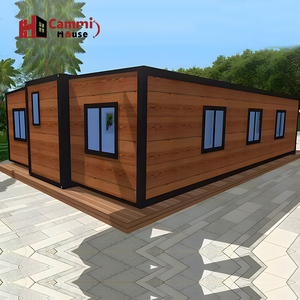
Cammi House Breathable Easy Folding Expandable Container Unit
Engineered light-steel foldable housing unit featuring high vapor permeability, 3-bedroom modular configurations, and sub-30 minute deployment.
Get Catalog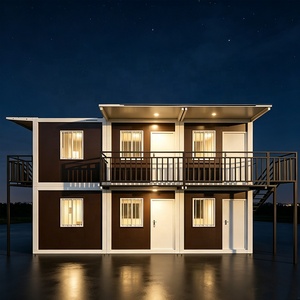
20FT 2-Story Thermal Flat Pack Container Unit & Terrace
Heavy-duty structural steel frame with high R-value insulation panels, optional integrated power distribution, and modular exterior terrace systems.
Get Catalog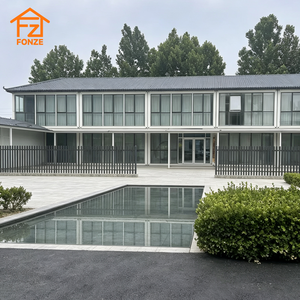
Prefabricated Flat Pack Modular Unit for Camps & Hospitals
Multi-purpose modular shelter unit optimized for rapid medical station setup, worker camps, administrative offices, and institutional dormitories.
Get Catalog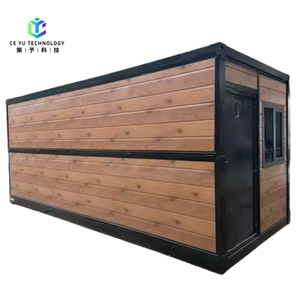
20ft Custom Foldable Modular Shelter & Storage Unit
Versatile industrial enclosure featuring modern architecture, heavy floor loading capacities, and customizable workshop/storage layouts.
Get Catalog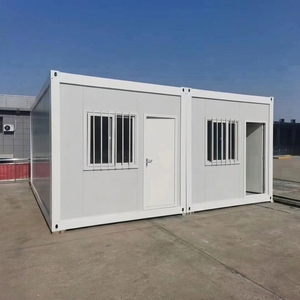
Insulated Flat Pack Shelter Unit for Mining & Energy Camps
Polyurethane sandwich panel walls designed for high thermal resistance, dust seal integrity, and extreme temperature stability in remote mining sectors.
Get Catalog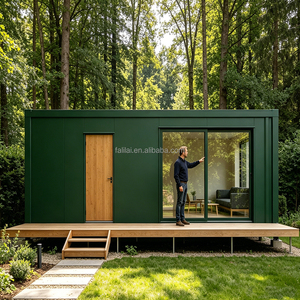
OEM Detachable Single-Story Modular Equipment Garage Shelter
Precision-manufactured galvanized steel structure ideal for remote machinery housing, command offices, and technical equipment control centers.
Get Catalog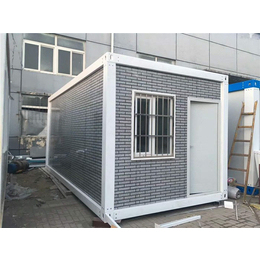
Acoustic Sound-Insulated Modular Equipment & Office Shelter
High-density rockwool core insulation engineered for superior sound attenuation, fireproofing (Class A1), and eco-friendly thermal preservation.
Get Catalog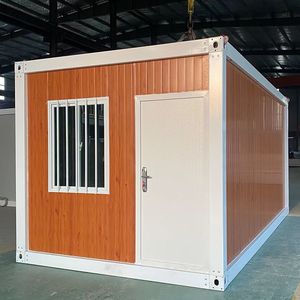
20ft Quick-Assemble Modular Shelter Cabin Unit
Optimized flat-pack shipping profile delivering up to 4 units per ocean shipping bundle, reducing international freight logistics overhead by 70%.
Get Catalog1. Technical Whitepaper: The Evolution of Industrial OEM/ODM Equipment Shelters
In modern industrial, telecommunication, utility, and energy sectors, structural reliability and climate control are non-negotiable. As global project footprints expand into remote and environmentally aggressive regions—ranging from sub-zero Arctic sites to high-corrosion coastal regions and arid deserts—the demand for high-performance OEM/ODM modular equipment shelter units has surged exponentially. Industrial buyers no longer view prefabricated enclosures as temporary stopgaps; they are mission-critical operational assets that safeguard multi-million dollar power grids, fiber-optic distribution systems, server banks, and field personnel.
As a premier global exporter of modular equipment shelter units, our manufacturing ecosystem combines heavy-duty cold-formed galvanized structural steel framing with thermal sandwich panel envelope engineering. This integrated approach solves key challenges inherent in field deployments: structural deflection under load, thermal bridging, electromagnetic signal degradation, moisture infiltration, and high logistical transport costs.
High-Yield Steel Galvanization
Structural frames crafted from hot-dip galvanized DX51D+Z steel with zinc coating weights up to 275 g/m², providing C4/C5 atmospheric corrosion protection under ISO 12944 standards.
Advanced Thermal Envelope
Insulation core options utilizing Polyisocyanurate (PIR), Polyurethane (PUR), or high-density Mineral Rockwool achieving thermal conductivity (λ) down to 0.022 W/m·K.
Seismic & Wind Load Rating
Engineered according to EN 1993 (Eurocode 3) structural specifications, rated to resist hurricane-force winds up to 180 km/h and Zone 4 seismic activity.
2. OEM/ODM Custom Engineering Workflow for Global Procurement
As an experienced exporter specializing in original equipment manufacturing (OEM) and original design manufacturing (ODM), our facility provides full-spectrum fabrication tailor-made to enterprise project parameters. We bridge the gap between architectural layout requirements and structural field mechanics.
Phase 1: Technical Requirement Analysis & CAD Modeling
Every industrial project begins with custom structural parameterization. Procurement teams submit environmental site parameters—including ambient temperature ranges, ground bearing capacity, wind velocity vectors, and internal thermal loads generated by operational equipment. Our engineering team utilizes advanced 3D BIM (Building Information Modeling) and Finite Element Analysis (FEA) software to simulate load behavior under dynamic stress.
Phase 2: Tailored Structural Cutouts & MEP Integration
Unlike standard off-the-shelf container boxes, specialized equipment shelters require pre-engineered cutouts for HVAC wall units, IP65/IP66 rated cable entry transit frames (ROXTEC compatible), automatic louvers with sand traps, fire suppression nozzles (FM-200 / Novec 1230), and explosion-proof electrical fittings. Through our OEM service, all penetration points are reinforced with internal tubular steel sub-frames and weather-sealed with silicone gaskets prior to powder coating.
Phase 3: High-Speed Precision Manufacturing & Assembly Testing
Our Turkish manufacturing plant spans automated CNC roll-forming lines, robotic welding stations, and electrostatic powder coating bays. Structural steel members are cold-formed to exact tolerances, ensuring 100% interchangeability of modular panels on-site. Before containerized packing, prototype shelter builds undergo strict factory acceptance testing (FAT), including water tightness testing under pressurized spray nozzles, structural squareness verification, and coating thickness gauging.
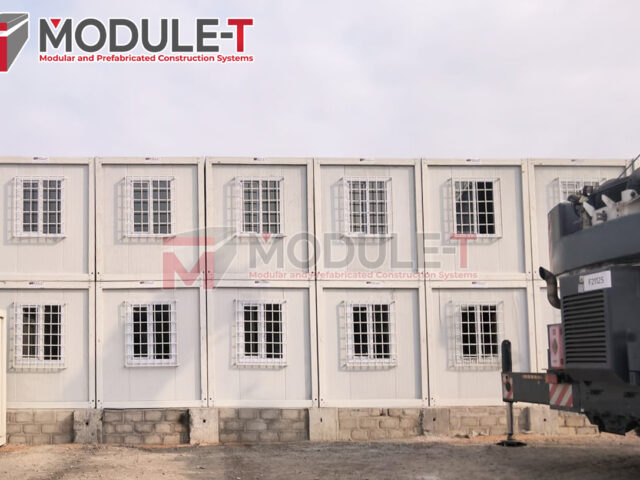
Figure 1: High-capacity multi-story modular equipment and operational camp complex manufactured for infrastructure projects.
3. Future Procurement Trends in Modular Equipment Shelters (2026–2035)
The global market for modular buildings and specialized equipment shelters is undergoing a paradigm shift driven by sustainability targets, digital monitoring capabilities, and supply chain rationalization. Enterprise buyers must align their procurement strategies with four key emerging industry trends:
1. Decarbonization & Green Building Certifications (LEED / BREEAM)
Governments and multinational corporations are mandating lower embodied carbon footprints across construction projects. Future procurement specifies low-carbon steel manufactured via Electric Arc Furnace (EAF) technology, zero-ODP (Ozone Depletion Potential) and zero-GWP (Global Warming Potential) insulation blowing agents, and 100% recyclable structural components. Modular shelters manufactured with demountable structural frames allow 100% material recovery upon project decommissioning.
2. IoT Integration & Smart Structural Sensing
Next-generation equipment shelters are evolving into smart nodes equipped with embedded sensor networks. Structural health sensors monitor micro-deflections and vibration strains caused by heavy machinery inside the shelter. Meanwhile, internal environmental sensors continuously feed real-time data concerning humidity, dew point condensation risks, and thermal distribution directly to centralized SCADA systems.
3. Rapid-Deploy Flat-Pack Logistics Minimization
Rising international shipping rates have placed a premium on freight efficiency. The industry trend is moving aggressively away from rigid fully welded 3D container structures toward knock-down flat-pack modular shelters. By shipping four flat-packed 20ft units inside a single ISO standard 20ft container shipping footprint, exporters achieve a 75% reduction in carbon emissions during transport while substantially cutting ocean freight tariffs.
4. Hybrid Structural Enclosures for Extreme Environments
As remote energy projects move into extreme environments—such as offshore sub-stations, high-salinity coastal areas, and desert solar farms—demand is rising for hybrid shelter compositions. These combine light-gauge structural steel frames with exterior fiber-reinforced polymer (FRP) cladding panels to eliminate corrosion risks, coupled with phase-change materials (PCM) inside sandwich panel walls to regulate indoor temperature passively.
4. Technological & Manufacturing Innovation Benchmarks
To deliver competitive advantages for global EPC contractors and industrial buyers, our manufacturing process incorporates state-of-the-art technological enhancements:
Automated PIR Continuous Lamination
Utilizing continuous double-belt lamination press lines to produce high-density PIR sandwich panels (40–42 kg/m³). This eliminates internal air voids, ensures uniform adhesion to steel skins, and delivers Class B-s1,d0 fire behavior ratings under EN 13501-1 standards.
Hermetic Thermal Bridge Elimination
Traditional steel frames often suffer from thermal bridging at structural corner posts. Our proprietary connection joints feature integrated EPDM thermal breaks, preventing energy loss, interior sweating, and corrosion initiation in humid operational climates.
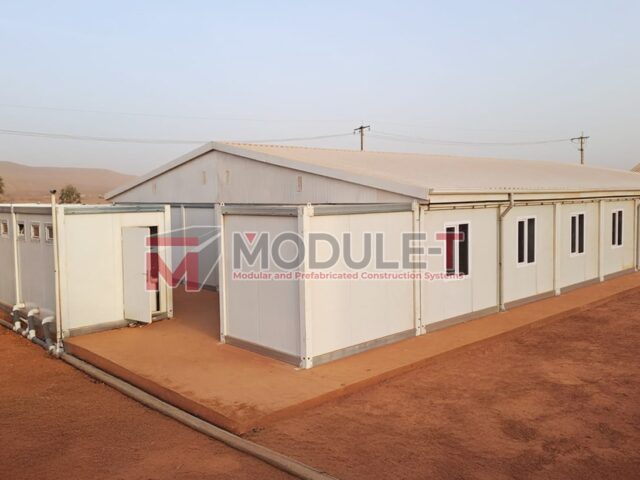
Figure 2: Precision roll-forming and assembly of modular equipment shelters at our ISO-certified manufacturing facility.
5. Enterprise Advantages & Manufacturer Capabilities
As a world-class Turkish modular building manufacturer and international exporter, our enterprise baseline provides unmatched reliability, regulatory compliance, and economic value for strategic B2B buyers:
- Strategic Turkish Logistics Advantage: Positioned at the crossroads of Europe, Asia, and Africa, our Istanbul production facilities leverage direct access to major deep-water ports. This guarantees rapid maritime transit times to EMEA and Americas project destinations at competitive freight rates.
- Comprehensive International Quality Certifications: Fully certified under ISO 9001:2015 for Quality Management, ISO 14001 for Environmental Management, and CE Marking compliance under EN 1090-1 / EN 1090-2 structural steel standards.
- High-Volume Production Output: Operating automated panel and structural roll-forming lines capable of producing over 500 modular units per month, ensuring swift delivery schedules even for large-scale tender requirements.
- Complete End-to-End Field Services: Beyond manufacturing, we supply comprehensive installation drawings, step-by-step video manuals, and on-site engineering supervision to ensure error-free assembly anywhere in the world.
6. Frequently Asked Questions (FAQ) for Modular Equipment Shelter Procurement
Clear technical answers to common questions asked by industrial procurement directors, structural engineers, and site managers.
Q1: What are the primary differences between an OEM/ODM equipment shelter and a standard shipping container?
Standard ISO shipping containers are constructed with heavy corrugated steel walls that lack thermal insulation and create severe thermal bridging, condensation, and temperature control challenges. In contrast, engineered OEM/ODM equipment shelters feature flat-pack structural frames, insulated sandwich panel walls (PIR/Rockwool), integrated EPDM weather seals, pre-engineered cable entry ports, and precise structural cutouts tailored for HVAC and power infrastructure.
Q2: How are thermal insulation values (U-values) customized for extreme ambient temperatures?
We customize thermal performance by altering the sandwich panel core thickness (50mm, 60mm, 80mm, 100mm, or 150mm) and chemical core composition. For extreme cold (below -30°C) or extreme heat (above +50°C), we utilize 100mm–150mm PIR or high-density Rockwool panels, achieving low U-values down to 0.15 W/m²K, minimizing internal HVAC power consumption.
Q3: How long does on-site assembly take for a standard 20ft flat-pack modular equipment shelter?
A standard 15 m² (20ft) flat-pack modular shelter unit can be fully assembled on site in just 2 to 3 hours using a basic forklift or light crane and a crew of 3 skilled workers. All corner columns, roof frames, and wall panels are pre-drilled and fitted with quick-connect structural bolts and gaskets.
Q4: What certifications are provided with exported equipment shelter shipments?
Each shipment includes comprehensive quality and compliance documentation: ISO 9001:2015 quality control certificates, CE certification under EN 1090 structural steel execution standards, raw steel mill test certificates (MTC), sandwich panel fire resistance test reports (EN 13501-1), and structural load calculation reports stamped by certified engineers.
Q5: Can equipment shelters be customized with RFI/EMI shielding for telecom and electrical substations?
Yes. Under our ODM workflow, we integrate inner metallic shielding skins, continuous conductive gaskets at panel joins, and specialized EMI-filtered cable transit glands to prevent electromagnetic interference from affecting sensitive radio, switchgear, and telemetry equipment.