Whitepaper: Engineering & Procurement Standards for Portable Ablution Shower Containers
In modern industrial project management, remote camp infrastructure, and large-scale public civil works, sanitary infrastructure is no longer an afterthought. Facilities directors and procurement leads recognize that employee welfare, environmental compliance, and site operational efficiency directly depend on hygienic, durable, and climate-resilient sanitary facilities. Portable ablution shower container units engineered in China have established a global benchmark, combining economic scalability with rigorous mechanical engineering standards.
This industry manual evaluates the structural mechanics, thermal performance, plumbing specifications, macro procurement trends, and technological innovations defining next-generation modular ablution blocks.
1. Engineering Specification & Structural Matrix
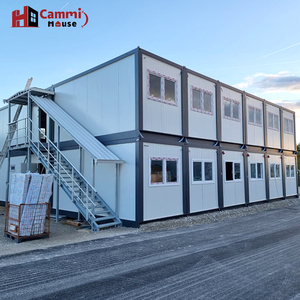
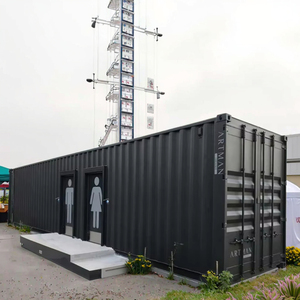
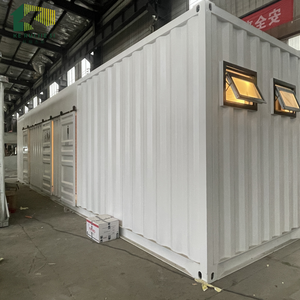
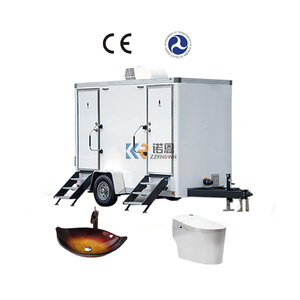
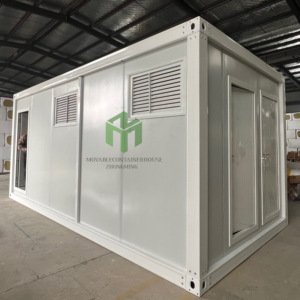
To withstand extreme operating environments—ranging from sub-zero Siberian mining camps to humid tropical oil projects in West Africa—our portable ablution blocks utilize high-density polyurethane (PU) and fire-resistant rockwool core sandwich panels paired with heavy structural steel frameworks.
| Component / Parameter | Standard Commercial Grade | Heavy-Duty Industrial Mining Grade |
|---|---|---|
| Primary Structural Frame | 2.5mm Cold-rolled Q235B Galvanized Steel | 3.5mm–4.0mm Hot-dip Galvanized Q355B Structural Steel |
| Wall Insulation Core | 50mm EPS / PU Sandwich Panel (Density: 40 kg/m³) | 75mm–100mm Polyurethane (PU) / Structural Rockwool (120 kg/m³) |
| Flooring System | 18mm Fiber Cement Board + 2.0mm Anti-Slip PVC Sheet | 18mm Marine Plywood + 3.0mm Aluminum Checker Plate / Epoxy Resin |
| Plumbing Piping Network | Standard PPR Fresh Water / PVC Drainage Lines | Insulated Heat-Traced PEX Fresh Water / Heavy-Duty Schedule 80 PVC |
| Water Fixtures & Hardware | Stainless Steel 304 / Chrome Plated Brass Water-Saving Faucets | Vandal-Resistant Stainless Steel 316 Flush Valves & High-Pressure Showers |
| Roof Load / Wind Resistance | Snow: 0.8 kN/m² | Wind: 100 km/h | Snow: 2.5 kN/m² | Wind: 180 km/h (Typhoon/Cyclone Reinforced) |
2. Macro Trends Shaping Global Ablution Container Procurement
Procurement strategies for temporary buildings are undergoing a structural shift driven by stringent ESG (Environmental, Social, and Governance) policies, carbon footprint reduction targets, and volatile international logistics costs. Key market drivers include:
Closed-Loop Water Recycling
Integration of advanced greywater filtration and blackwater separation systems allows up to 60% of shower water to be treated for flushing, satisfying strict environmental regulatory approvals.
Off-Grid Solar Integration
Roof-mounted solar PV arrays paired with lithium battery banks supply continuous power for LED lighting, exhaust ventilation, and solar-thermal water heaters in off-grid deployments.
Flat-Pack Freight Optimization
Designing containers as fully demountable, modular flat-pack kits ensures maximum volume density per shipping container, drastically lowering ocean freight carbon footprints.
3. Future Development & Technological Trends in Portable Sanitation
The next decade of modular sanitary space design focuses on anti-pathogenic environments, smart telemetry monitoring, and smart resource management:
- Anti-Bacterial Nanocoatings: Interior wall panels and high-touch steel surfaces are treated with titanium dioxide (TiO2) antimicrobial coatings to prevent bacterial growth and suppress mold in humid shower environments.
- IoT Waste Level & Utility Sensing: Integrated smart sensors track water consumption, hot water storage temperatures, and wastewater holding tank capacities in real time, alerting site managers to maintenance needs prior to operational overflow.
- Modular Plug-and-Play Expansion: Standardized structural corner castings and universal plumbing quick-connects allow multi-container blocks to be chained together as site workforces grow from 50 to 5,000 personnel.
- Biological Vacuum Toilet Systems: Borrowing technology from aviation and marine design, vacuum flush units reduce water consumption per flush from 6 Liters down to 0.8 Liters, expanding operational autonomy in arid regions.
4. Total Cost of Ownership (TCO) & Financial Optimization
When evaluating portable ablution units, procurement executives must balance initial capital expenditure (CAPEX) with long-term operating costs (OPEX). While conventional brick-and-mortar sanitary blocks require foundation excavation, extensive site labor, and permanent zoning permits, modular flat-pack containers provide an immediate financial advantage:
- 80% Reduction in Site Construction Time: Worksites can achieve fully operational sanitary units within days of port arrival.
- Asset Mobility & High Residual Value: Upon project completion, containerized ablution units can be dismantled, packed into flat kits, and re-shipped to new project sites, amortizing capital investment across multiple project lifecycles.
- Zero Water Damage Integrity: Internal wet rooms feature one-piece molded fiberglass or fully welded stainless steel floor pans, completely eliminating sub-floor moisture rot and structural decay.