A Portable Worksite Drying Room can solve a small problem before it becomes a long, uncomfortable shift: wet gloves, damp jackets, and boots that never quite dry. The UK Health and Safety Executive’s 2023/24 statistics estimated 604,000 workers experienced non-fatal workplace injuries. That figure is not specific to wet clothing, but it underlines why practical worksite conditions deserve attention. NIOSH guidance also warns that cold, wet conditions can contribute to cold stress and reduce workers’ comfort and ability to work safely.
Cold-stress researcher Dr. John Castellani of the U.S. Army Research Institute of Environmental Medicine has studied how cold and wet conditions affect the body. His research supports a practical point: damp clothing can increase heat loss. This is a paraphrase, not a direct quotation. A properly sized drying room gives crews a warm, designated place to hang coats and workwear, with airflow that helps garments dry between shifts. It can also keep wet gear away from break areas and equipment.
The value is tangible. Picture gloves drying overnight instead of staying clammy in a van. A portable unit can move as the project changes, without requiring a permanent building. Still, it is not magic. Capacity, ventilation, power supply, and safe placement all matter. A well-chosen Portable Worksite Drying Room makes drying part of the work plan, not an afterthought.
What Is a Portable Worksite Drying Room?
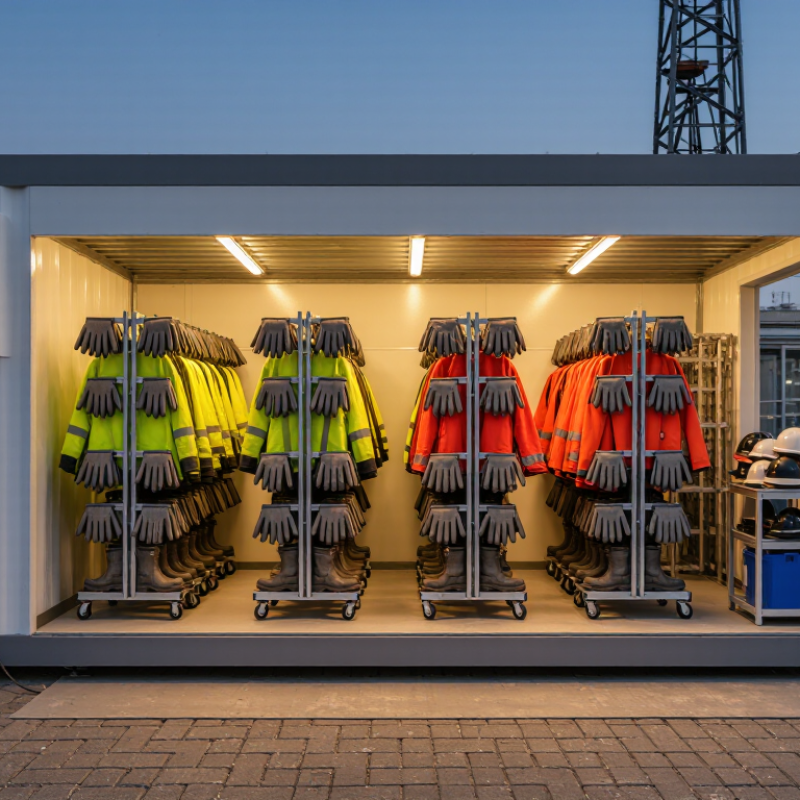
A portable worksite drying room is an enclosed temporary space for drying damp workwear, boots, gloves, and job equipment. It may combine controlled heat, moving air, and sometimes dehumidification, drying items more evenly than a cold, crowded shed. Warm air matters.
Workers can hang clothing with space between items, allowing air to reach sleeves and boot openings. A rail, drip tray, and washable floor help keep wet gear organized and reduce puddles. Place the room where workers can reach it without carrying muddy clothing through clean offices or break areas. Ventilation and electrical setup should follow the equipment instructions and site conditions.
It is not a magic box. Thick gloves or soaked boots may take much longer to dry than a light jacket, and overloading can restrict airflow. Check equipment before storing it, and keep items away from heaters unless the unit is designed for direct contact. Routine checks can catch blocked vents, moisture buildup, or worn parts. The best setup is practical, not perfect: easy to clean, sized for the crew, and close enough to use every day. If the layout feels awkward, that is a useful reason to adjust it.
How Does a Portable Drying Room Operate?
Why Choose a Portable Worksite Drying Room?
How Does a Portable Drying Room Operate?
A portable drying room creates a controlled space for drying damp workwear, boots, gloves, and equipment. Insulated panels help retain warmth, while a heater raises the air temperature to a selected setting. A fan then circulates warm air around hanging garments and footwear. Airflow matters. Leave space between items, or damp patches may remain where fabric touches. Depending on the design, moisture leaves through ventilation or a dehumidifier.
After loading the room, workers close the door and set the controls according to the equipment instructions. Sensors monitor temperature, and some systems adjust heating to help prevent overheating. Drying time varies with fabric thickness, initial moisture, room temperature, and how full the space is. A soaked jacket takes longer than a lightly damp shirt. Check seams, linings, and boot interiors before using gear again. Place the room on a stable, level surface, with air inlets and outlets clear. Small setup mistakes count. Blocking a vent can slow drying, even when the heater feels hot. Very wet items may need longer cycles; cleaning filters and vents regularly helps keep airflow dependable.
Which Worksite Problems Can It Address?
Why Choose a Portable Worksite Drying Room?
Which Worksite Problems Can It Address?
Rain, washdown, and morning dew can leave jackets, gloves, and boots damp before the next shift. A portable worksite drying room gives crews a designated place to hang wet gear. Warm, moving air can help items dry between shifts. Boots need space and airflow, not a heap beside a heater. That detail matters.
Damp clothing can make breaks uncomfortable and leave vehicle seats or shared rooms wet. A drying area keeps wet workwear together and gives each person a more consistent place to store it. It can also help reduce lingering moisture and musty smells, though results depend on airflow, load size, and drying time. Small crews may need only a compact setup; larger teams should consider how many garments must fit at once.
It is not a cure for every wet-gear problem. Very soaked items may need longer, and tightly packed clothing dries unevenly. A room also needs a suitable power supply, clear hanging space, and regular checks for blocked vents or pooled water. Site managers should follow the unit’s operating instructions and avoid drying gear contaminated with substances that require separate handling. On a changing site, portability helps—but moving the room can interrupt use. That trade-off is worth considering.
What Benefits Does Portable Drying Provide?
A portable worksite drying room gives wet coats, gloves, and boots a warm, ventilated place to dry near the crew. That matters on sites where gear gets soaked before lunch and workers otherwise leave it beside a heater or in a vehicle. The UK Health and Safety Executive’s workplace temperature guidance recommends at least 16°C for most indoor work, or 13°C for strenuous work. A drying room is not a substitute for suitable site conditions, but it can offer a more controlled space for changing and drying between shifts. Small detail, real difference.
Moisture also deserves attention beyond comfort. The U.S. Environmental Protection Agency’s A Brief Guide to Mold, Moisture and Your Home notes that mold can grow on damp materials within 24 to 48 hours. That guidance concerns building materials, not a measured drying time for workwear, so it should not be stretched into a guarantee. Still, it supports getting wet items dry promptly. A portable room can keep damp clothing away from offices and break areas, while helping crews start the next shift with usable gear. It does need ventilation, safe placement, and sensible loading; packed boots and thick gloves may dry slowly. Not magic. A practical facility, if someone checks it.
How Should a Worksite Drying Room Be Selected?
Choosing a portable worksite drying room starts with the crew’s daily routine. Estimate how many people need to dry coats, gloves, boots, and waterproof trousers at the same time. A room sized only for jackets can leave wet boots on the floor and block airflow. Check the available power supply, too. Heating demand may exceed what a temporary site connection can support.
Look at temperature control, ventilation, insulation, and drip management. Gentle, steady airflow is often more useful than intense heat, which can damage some fabrics or create uneven drying. Confirm that shelves and hanging rails suit the gear your team actually wears. Also consider access: workers should be able to load wet clothing without crowding the entrance. Portability matters, but frequent relocation can make setup and power connections less convenient than expected.
Tips: Test the layout with a typical shift’s gear before purchase. Leave room for air to circulate. Check cleaning and maintenance instructions, and verify electrical requirements with a qualified site professional. One detail is easy to overlook: a drying room still needs a sensible place for wet items to enter and dry items to leave. A simple traffic plan can prevent both piles from forming beside the door.
Conclusion
A Portable Worksite Drying Room is a movable, enclosed space designed to dry work clothing, boots, and protective equipment where crews need it. By using controlled airflow and heat, it helps moisture evaporate more efficiently than leaving items in a cold or poorly ventilated area. Its setup can be adapted to different sites, making it useful when teams work outdoors, move between locations, or lack permanent drying facilities.
Portable drying can help address damp gear, uncomfortable shifts, slow turnaround between tasks, and the buildup of moisture in shared work areas. It supports quicker reuse of clothing and equipment and can contribute to a more comfortable, organized worksite. When selecting a drying room, consider crew size, available space, power supply, expected drying loads, ease of transport, ventilation, and routine maintenance. Choosing a unit that matches the site’s conditions and daily workload helps ensure practical, consistent drying without taking up unnecessary space.